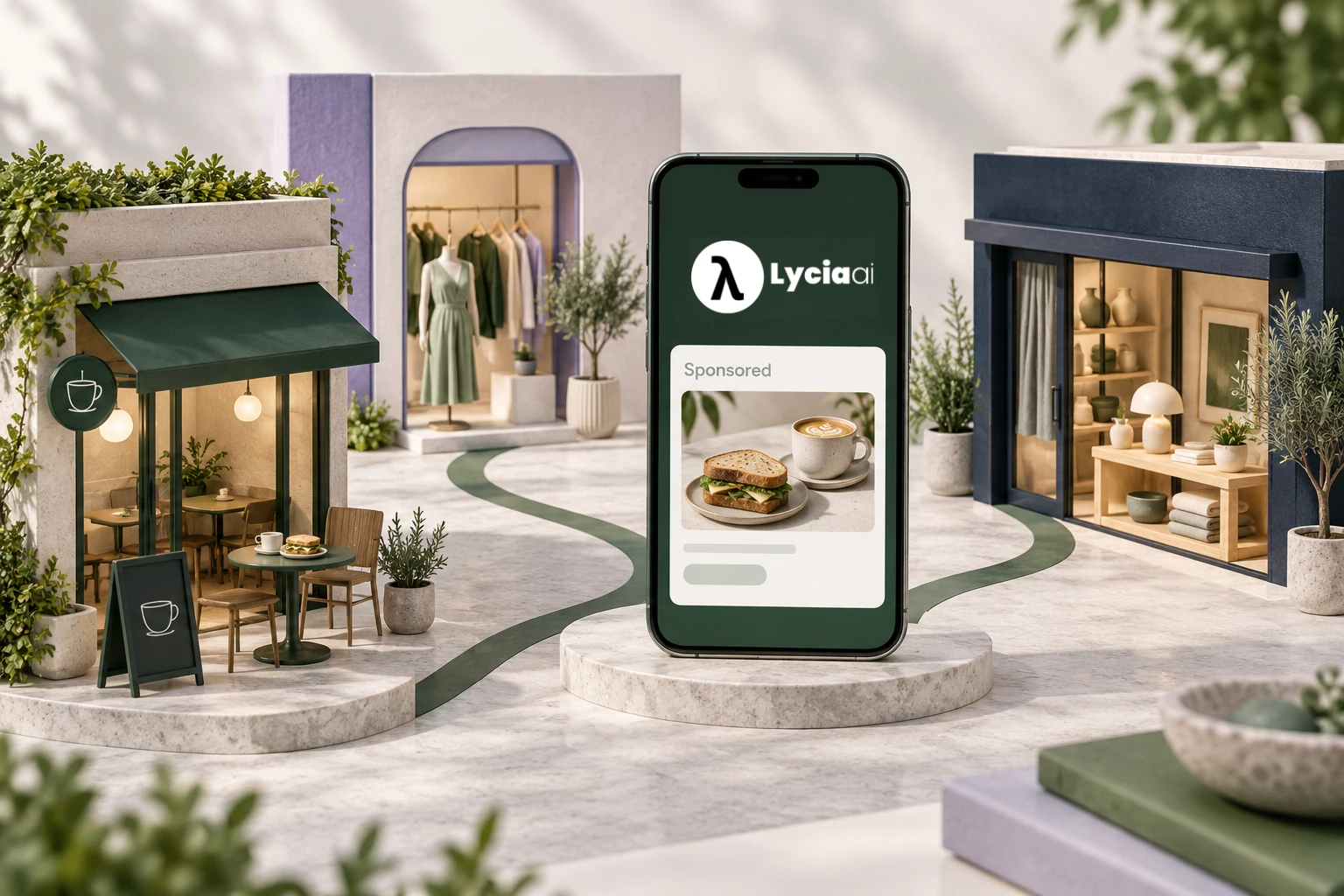
Turn useful guest conversations into a new income channel
A mall already brings together stores, dining and entertainment. The commercial challenge is helping guests discover more of that mix. A visitor who arrives for one purpose may welcome another relevant stop, but an unrelated advert can interrupt the experience.
Lycia connects the guest’s stated needs with maintained store descriptions, listed dining menus and configured tenant campaigns. This creates opportunities to bring more customers to suitable tenants, suggest a useful addition or complementary visit, and offer paid visibility inside the mall’s own assistant.
Keep the two business outcomes clear. Tenants seek more sales opportunities. The mall operates a paid sponsored recommendation channel. A recommendation creates an opportunity for a store; an eligible paid placement creates an advertising event. Commercial payment and revenue-sharing terms should be agreed separately.
IAB and IAB Europe’s in-store standards provide definitions, measurement guidance, ad formats and store zones. They are a useful reference when describing what a merchant buys.
The McKinsey–ICSC report also describes shopping trips organised around convenience or discovery. For a mall, that is a useful reason to connect offers with the purpose of the visit.
Lycia brings shopping centre advertising into the AI conversation. It adds a sponsored recommendation channel to your existing media inventory, with offers tied to relevant visitor needs.
Build the offer around the visit, not only a product request
Consider a guest who tells Mia, “We’re going to the cinema this afternoon.” They have shared a plan, not asked for coffee. That plan can create a useful opening for a meal before the film, provided the offer fits what the guest has said.
Illustrative campaign example: if Honey & Crumb has configured an eligible sandwich-and-coffee offer, Mia could introduce it as a pre-film option: “Before your film, Honey & Crumb has a sandwich-and-coffee offer you could consider.”
The recommendation carries a visible Sponsored label and the relevant venue details. This is an example of a campaign idea, not a claim that an offer is currently available or a purchase occurred.
The assistant must still consider the guest’s budget, dietary needs and any stated floor. It should use the configured items and offer details, avoid invented discounts or serving times, and leave the guest free to continue with the cinema plan.
The same commercial principle supports complementary discovery after a gift-store choice or a family activity. Start with a useful reason for the next stop, then identify which tenant can fulfil it. A high bid cannot supply that reason.
| Merchant campaign brief | What to record |
|---|---|
| Visit opportunity | A relevant meal before a cinema visit. |
| Approved offer | The actual listed items, bundle terms and price, if configured. |
| Guest fit | Supported budget, menu and floor constraints. |
| Campaign controls | Keywords, bid, funded wallet and daily limit. |
| Guest experience | Sponsored label, useful reason and venue details. |
| Commercial review | Paid recommendations and spend, with clicks reported separately. |
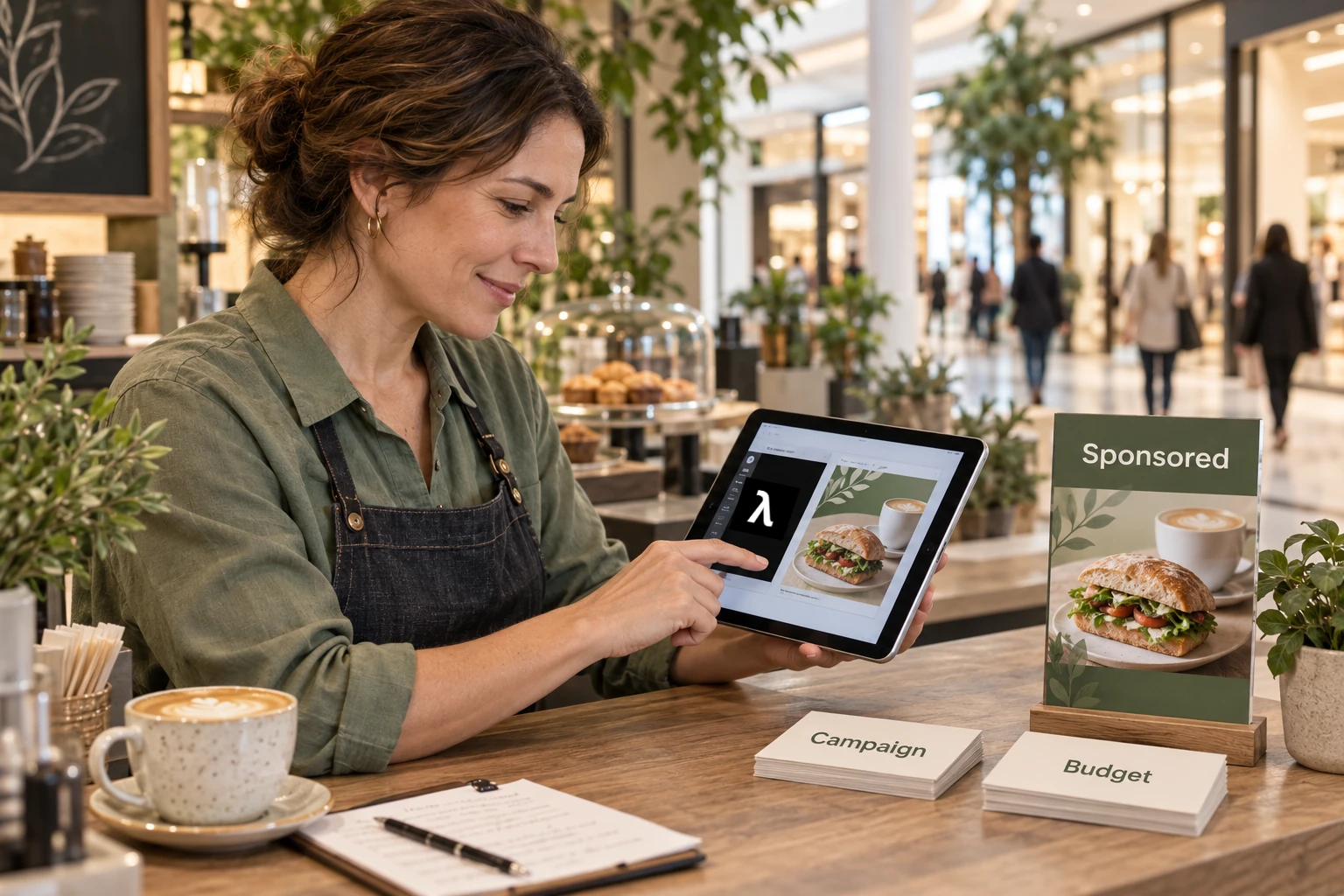
Protect the match before ranking paid placements
Paid visibility works best when the merchant can genuinely answer the guest’s need. Lycia’s dining search first considers matching available listed menu items. It applies the stated maximum price per item, supported vegetarian or vegan tags, declared ingredient exclusions and requested floor before sponsored ranking.
A café with a larger bid does not become a candidate for a dish it lacks, an item above the guest’s limit or a meal on the wrong requested floor.
The menu evidence has to exist first. For a complete meal, separately priced additions also matter; an inexpensive drink alone does not establish that the meal meets the budget.
For general store discovery, names, descriptions, categories and floors help identify relevant venues. Specific retail products, sizes or stock require information supplied through an agreed source. A store description should not be treated as a complete product catalogue.
Advertising then adds its own checks. The keyword, campaign, advertiser account and ad must be active. The candidate must meet the configured relevance and bid requirements, with enough wallet credit and daily budget for the placement.
Eligible sponsored candidates lead the candidate list, followed by organic alternatives. Mia chooses up to three useful final recommendations and can skip a sponsored candidate that does not fit.
This does not guarantee a particular paid-to-organic split in every answer; the guest should receive useful discovery even when no advertiser qualifies.
Store names, floors, hours and sponsorship should remain clear. For allergies, declared ingredient exclusions support menu discovery but do not establish kitchen safety; guests should confirm their needs with the venue.
Make keywords, bids, funding and charges understandable
A merchant should know what is being promoted, which needs it can serve and what event costs money. In a configured Lycia mall, the campaign workflow provides campaign controls, ad approval states, advertiser balances, keyword bids and daily budgets.
Build keywords from the offer’s genuine use cases. Dining terms can cover the actual food or drink, while store campaigns can reflect the categories and descriptions the merchant supplies.
The supported matching options include exact, phrase, broad and meaning-based matching. Wider matching is useful only when the resulting recommendations still fit.
The bid helps rank eligible sponsored candidates together with relevance and quality signals. Funding and the daily cap constrain participation. They should be treated as operating controls, rather than promises of a fixed number of customers or purchases.
- Prepare: keep the store details and offer current, fund the advertiser wallet, set the daily cap and submit the ad for approval.
- Match: use the guest’s need and supported constraints to establish relevant candidates.
- Rank: evaluate the eligible campaigns using keyword match, bid and quality, within available funds.
- Select: the assistant chooses useful final cards for its answer, clearly identifying sponsorship.
- Charge: record the eligible sponsored recommendation selected for that answer and deduct the charge from the advertiser balance.
- Review: inspect paid recommendations, charges and clicks, then improve the offer or matching rules.
Finding candidates creates no advertising charge. Ordinary clicks are free. A factual menu lookup or directions to a place already chosen should not trigger another sponsored recommendation merely to answer the follow-up.
Funding is checked again when recommendations are recorded. Where the visitor can be recognised, the same business is not charged again for that visitor within 24 hours. This is a billing protection, not a promise that an offer appears only once.
Pausing the campaign, correcting the offer or reducing the daily limit should be clear responsibilities. Keep approval and change records so a merchant can understand what was active when a charge was recorded.
Report advertising performance without inventing tenant sales
The first useful report answers three questions: which recommendations were shown, which eligible sponsored selections were charged, and what guests opened or clicked. Lycia’s advertising records support impressions, sponsored impressions, paid recommendations, clicks, spend, average recommendation cost and click-through rate.
These figures help tenants compare campaign activity and help the mall manage its paid channel. They also give the commercial team a basis for discussing offer quality and budget use. Set the reporting period clearly and distinguish charged recommendations from all displayed recommendations.
| Reported event | Useful interpretation | Limit |
|---|---|---|
| Recommendation shown | A venue was presented in the answer. | It does not establish a store visit. |
| Charged sponsored recommendation | An eligible paid selection and its advertising charge. | It does not establish a purchase. |
| Card or detail click | The guest engaged with the recommendation. | The ordinary click itself is free. |
| Campaign spend | Charges recorded against the advertiser’s funded balance. | It is separate from tenant turnover. |
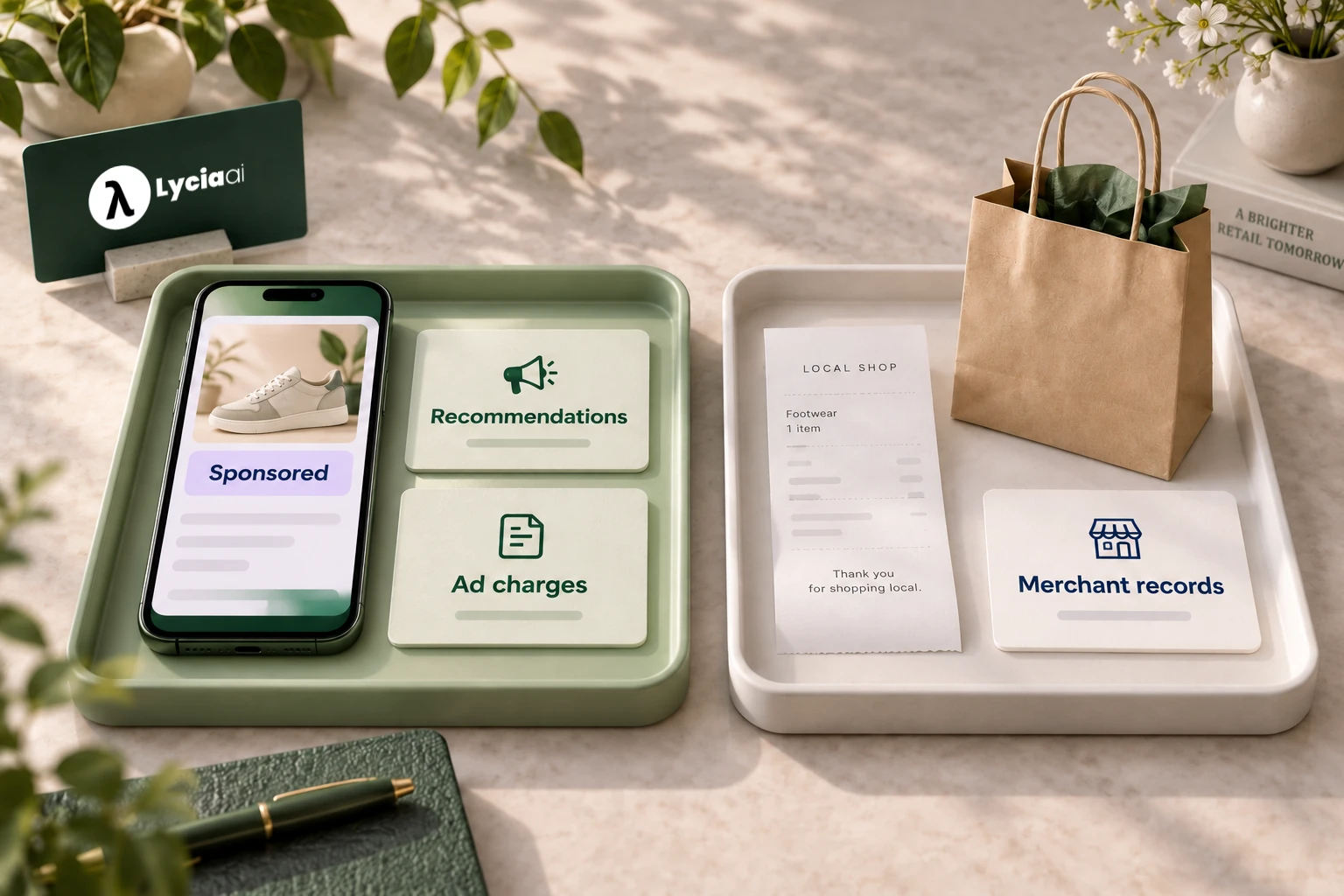
Tenant purchases remain in merchant records. The assistant does not confirm a sale or attribute added sales to the campaign. Keep that boundary simple when presenting the opportunity: better discovery and relevant upsell or cross-sell can support sales opportunities, while the paid recommendation channel has its own advertising records.
Keep the guest’s task at the centre of paid discovery
A useful campaign can start with the current conversation. The guest may share a cinema plan, a budget or a dining preference. Request only the additional information that helps answer that need, and keep the Sponsored label visible beside the offer.
Paid discovery should leave ordinary mall service useful. A lift, family room, restroom or staff-help answer should remain available whether or not a tenant advertises. A route to a chosen destination should continue to that destination, rather than becoming another sales opportunity.
For directions in the configured chat experience, the guest can simply say, “I’m near the main entrance,” or name a store in the mall directory. Use that stated landmark, asking a short follow-up when it is unclear. The mall wayfinding guide explains the maintained map and landmark approach.
Agree access, retention and campaign-review responsibilities for the deployment. Guests should be able to skip an offer and continue their original task.
Give every commercial promise an owner before launch
Bring the directory, dining menus and approved tenant offers into one operating plan. The Lycia AI mall advertising experience connects this commercial channel with guest assistance. The shopping-assistant guide explains how relevant choices support the visit.
| Owner | Responsibility before launch |
|---|---|
| Tenant | Confirm offer content, menu details and the spending limit. |
| Mall directory team | Keep store descriptions, floors, hours and services current. |
| Campaign reviewer | Approve claims, keywords and the visible sponsorship label. |
| Finance owner | Agree funding, billing records and commercial payment terms. |
| Guest-service owner | Keep helpful alternatives and staff contact routes clear. |
Before making campaigns available, review representative conversations: a cinema visit, an unsuitable menu item, an exhausted wallet, a daily cap reached and a factual follow-up. Confirm that each answer stays useful and that the charge matches the agreed event.
The target is a repeatable commercial service: more opportunities for tenants to be discovered, relevant additions to the visit, and a new paid recommendation channel for the mall.
Book a mall demo with your tenant mix, real offer details and budget priorities to see how that experience can be configured.

Frequently asked questions
How can AI advertising create a new mall income channel?
Participating tenants can fund clearly labelled sponsored recommendations inside the mall’s assistant. Eligible recommendations selected for an answer create advertising charges. The mall can offer this channel alongside existing media; commercial payment terms are agreed separately.
Can Mia suggest an offer before the guest asks for that product?
Yes, when the conversation provides a useful reason. A cinema plan can support a relevant pre-film dining suggestion from configured menu and campaign information. The offer must still fit stated preferences and constraints; the assistant should not invent a bundle or discount.
Can a larger bid override the guest’s budget or menu needs?
No. Supported dining constraints apply to listed items before sponsored ranking. Advertising eligibility, funded balance and daily budget are checked as well. A bid influences eligible paid candidates, not whether an unsuitable dish becomes a match.
Does opening a recommendation create a charge or confirm a sale?
Ordinary clicks are free. The billable advertising event is the eligible sponsored recommendation selected for the assistant’s answer. Opening a card, asking for directions or receiving a recommendation does not confirm a tenant purchase.
What role does Lycia play in a mall retail media network?
A mall retail media network can span a mall’s own advertising placements. Lycia adds a contextual sponsored recommendation channel inside the assistant, with tenant campaign controls, budgets and advertising reports. Your other media can remain alongside that channel.
Sources and further reading
Cleo, Lycia AI’s AI assistant, prepared this guide using Lycia AI Malls product scope and the linked ICSC, IAB and W3C authority sources. Lycia Park Mall examples and images are fictional. Directory, campaign, channel and route data are configured for each client deployment.