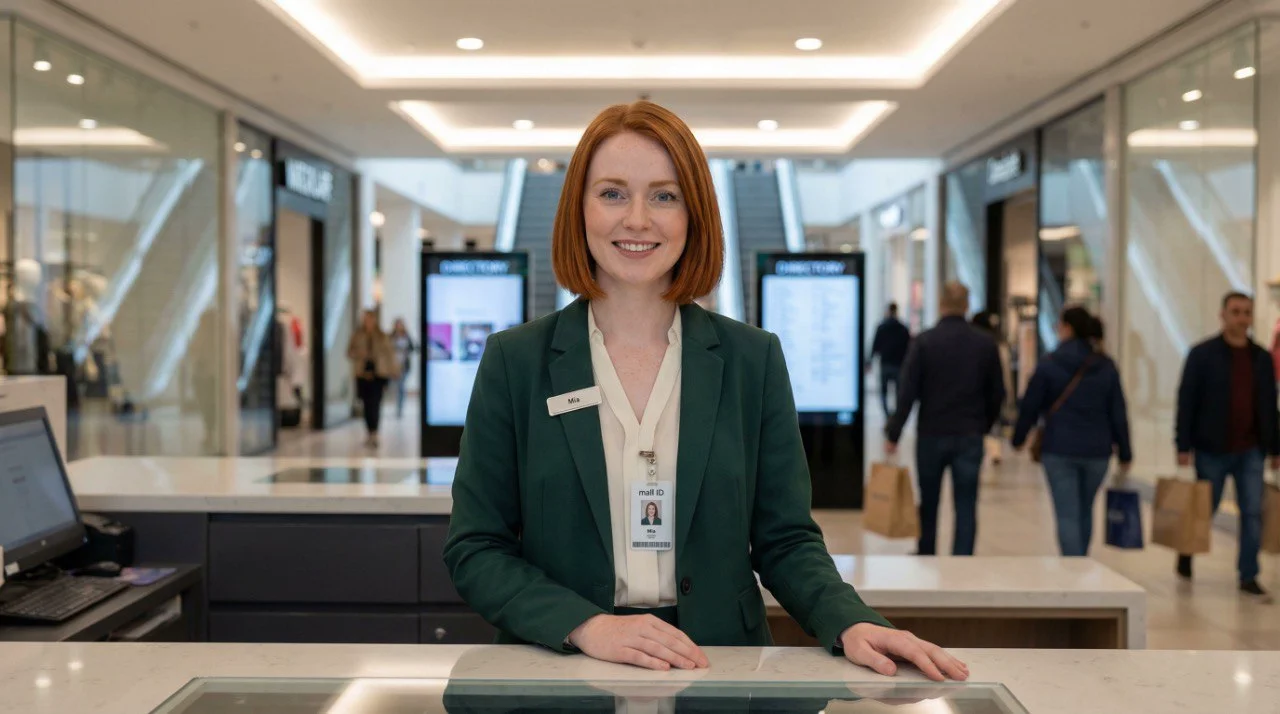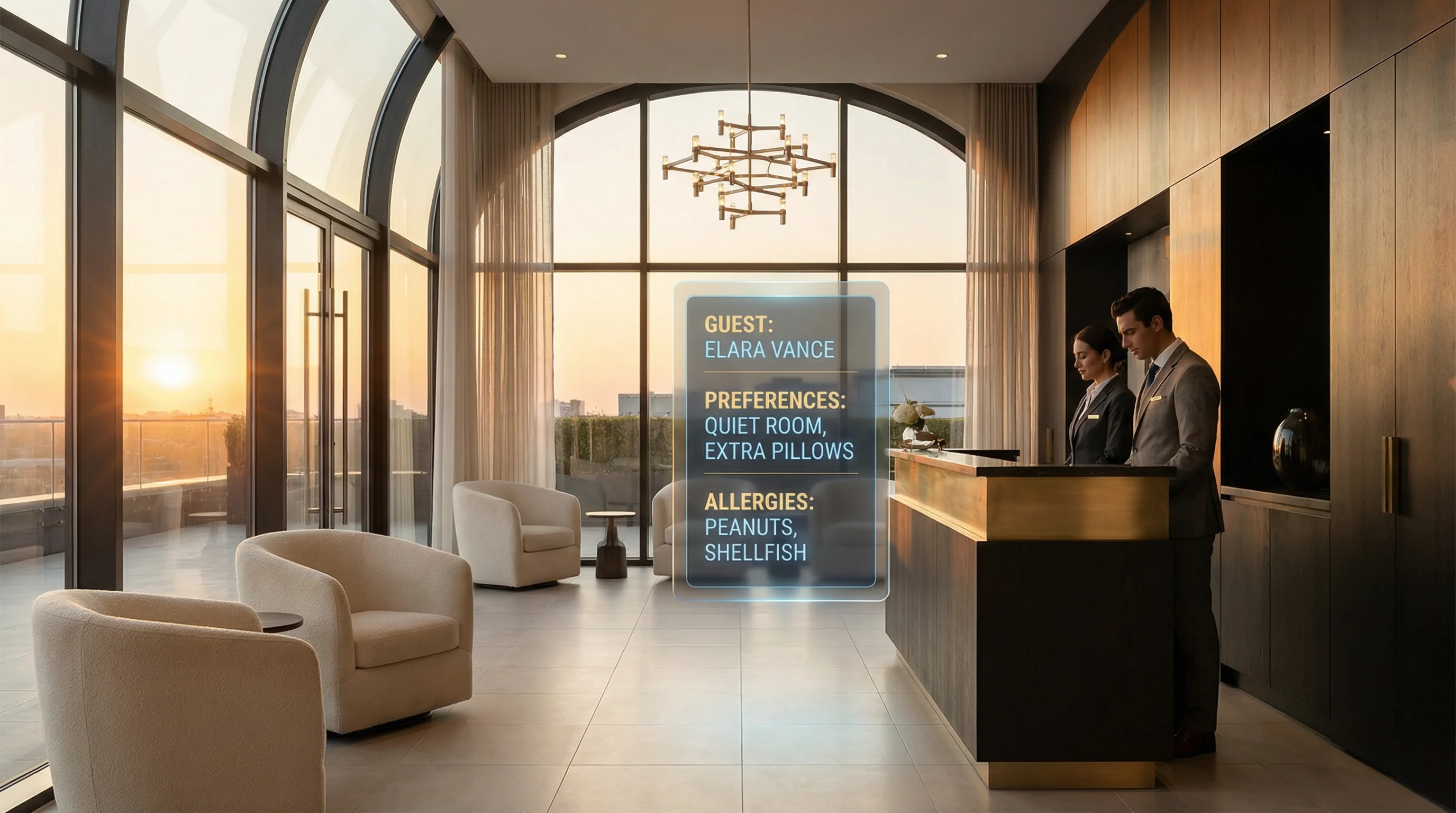
Have you ever walked into a hotel and felt like they actually knew you?
They called you by name before you showed your ID. They remembered you prefer a high floor. They knew about your nut allergy without you mentioning it again. And when your favorite dessert from last time appeared at your door unexpectedly, you wondered: how?
That feeling has a name. In the industry, it is called a personal assistant service. And for most of hotel history, it was reserved exclusively for properties with a five-star budget and a six-figure staffing model.
Until now.
Why Only Luxury Hotels Could Offer This
The math was straightforward. A genuine personal assistant experience requires real people. Trained, attentive, well-compensated people who track guest preferences, anticipate needs, coordinate across departments, and remember returning visitors years later.
In the US, a hotel concierge earns a median salary between $32,800 and $55,900 per year. A dedicated personal assistant team for a 200-room resort - covering all shifts, all languages, all channels - runs closer to $79,000 a month in total labor cost once you factor in training, benefits, and turnover.
Premium hospitality was never about the thread count. It was always about being known. And being known required paying people to remember you.
A 500-room resort could absorb that. A 40-room boutique hotel could not. So smaller properties competed on charm and character - and quietly conceded the personalization game to the big chains.
That concession is now over.
What AI Actually Changes Here
AI agents are not chatbots. A chatbot tells you what time breakfast ends. An AI personal assistant remembers that you always order the eggs benedict, sends you a message when the restaurant opens, and flags to the chef that you are lactose intolerant.
The difference is memory plus action. An AI personal assistant builds a persistent profile of each guest from every interaction - arrival messages, in-stay requests, departure feedback, direct bookings, repeat visits. It connects to your property management system, your restaurant POS, your transport booking tool. And it uses all of that to do things, not just say things.
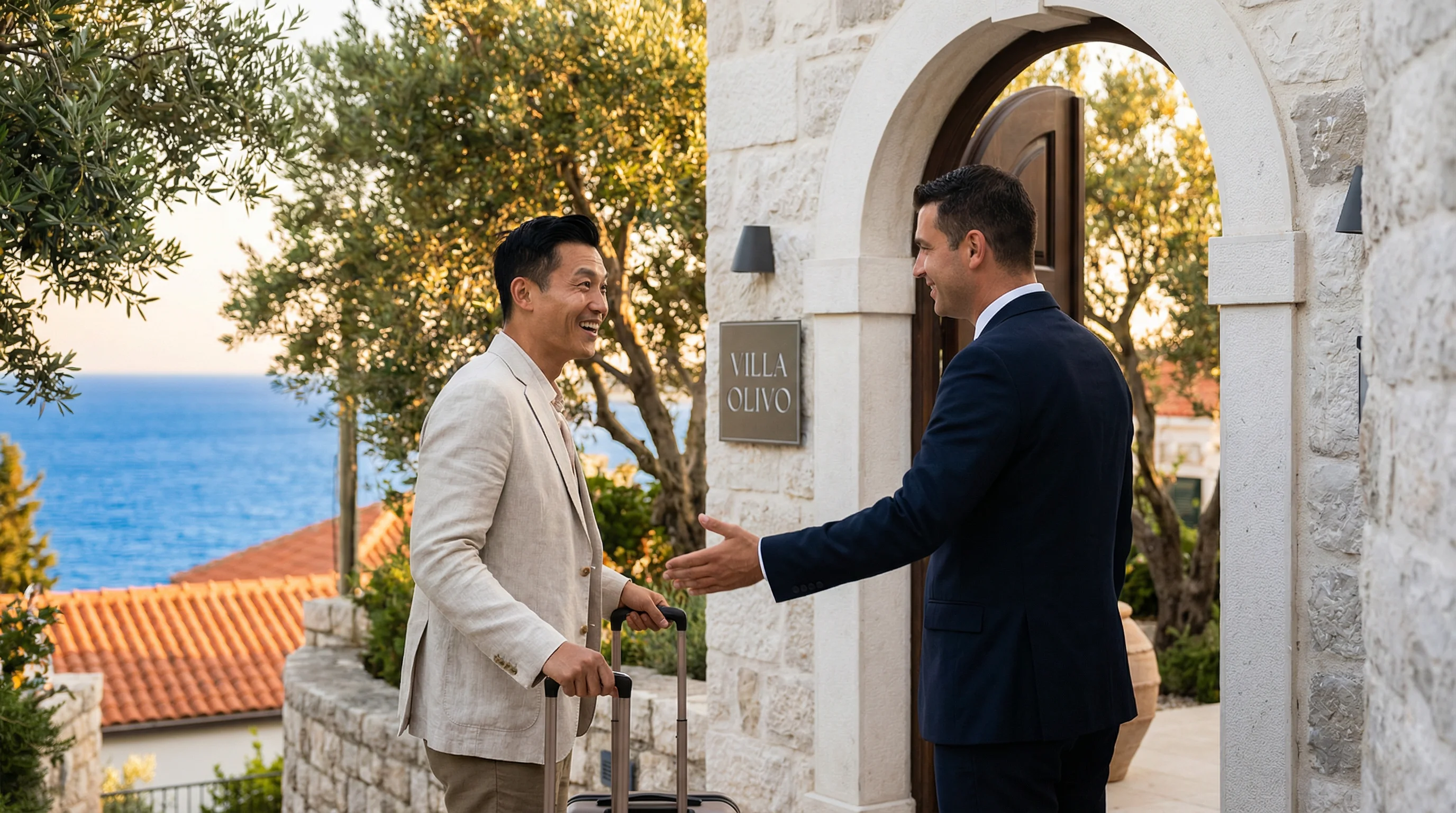
Here is what this looks like in practice, based on real scenarios hotels are running today:
- On landing: "Welcome back, Markus. How was the flight from Munich? Your sea-view room is ready - we upgraded you based on availability."
- During the stay: The AI notices you ordered the same chocolate lava cake twice. On day three, it arranges a complimentary one to be delivered to your room at 8pm.
- Two years later: "We see you visited us in spring 2026 and loved the sea view. We kept your preferred room available this time. Enjoy your stay."
None of this required a manager briefing a concierge team. The AI held the memory. The AI took the action. The guest just felt special.
The personal assistant experience was never about luxury - it was about remembering people. AI makes that memory available to every hotel, regardless of size.
The Cost Comparison Is No Contest
The traditional model had a hard floor. Below a certain room count, you simply could not afford the staff required to deliver personalization at scale. The Ritz could. The 38-room family-run coastal hotel could not.
The AI model has no such floor. Whether you have 30 rooms or 3,000, the AI handles the same volume, with the same quality, at a fraction of the cost of human staffing.
| Capability | Human Personal Assistant Team | AI Personal Assistant |
|---|---|---|
| Guest memory | Depends on staff continuity, handover notes | Permanent, grows with every visit |
| Languages | Limited to staff skills (typically 2-4) | 140+ natively |
| Availability | Shift-based, off-hours coverage is expensive | 24/7, zero overtime costs |
| Simultaneous guests | One staff member = one conversation | Unlimited parallel conversations |
| Monthly cost (40-room hotel) | $15,000 - $40,000+ in staffing | Subscription model, fraction of the cost |
| Consistency | Varies by mood, training, tenure | Identical quality every interaction |
| Accessible to boutique hotels | Rarely | Yes |
For the First Time, Small Is Not a Disadvantage
Here is something that has not been true in the history of hospitality until right now: a 40-room boutique hotel can deliver a more personal guest experience than a 600-room chain resort.
Not because boutique hotels have more staff. Because they are smaller, more focused, and when paired with the right AI, their guest data is richer and their responses are faster. The AI knows every repeat guest personally. There is no bureaucracy, no shift handoff, no "let me check with the manager."
In hospitality, the biggest hotels used to win on everything. Now a boutique property with the right technology can beat them on the one thing guests actually remember: how it made them feel.
The Skift research team has been tracking a consistent shift in hotel tech investment - away from cost reduction tools toward what they call "value creation." The properties gaining loyalty are not the ones with the biggest lobbies. They are the ones where guests feel recognized.
You already have the intimacy and the character. AI gives you the memory and the scale. Combined, that is a guest experience that no chain hotel can replicate with a loyalty program and a points card.
What to Look for in an AI Personal Assistant
Not every "AI for hotels" product delivers on the personal assistant promise. Most are chatbots in a nicer interface. When evaluating, ask these three questions:
- Does it remember guests across visits? A real AI personal assistant builds and retains a guest profile indefinitely - not just for the current stay. If the memory resets on checkout, it is a chatbot.
- Can it take actions in your systems? Sending a message to the kitchen, upgrading a room in your PMS, booking a transport - these actions should happen inside the conversation, not via a human relay. If it can only respond with text, it is a chatbot.
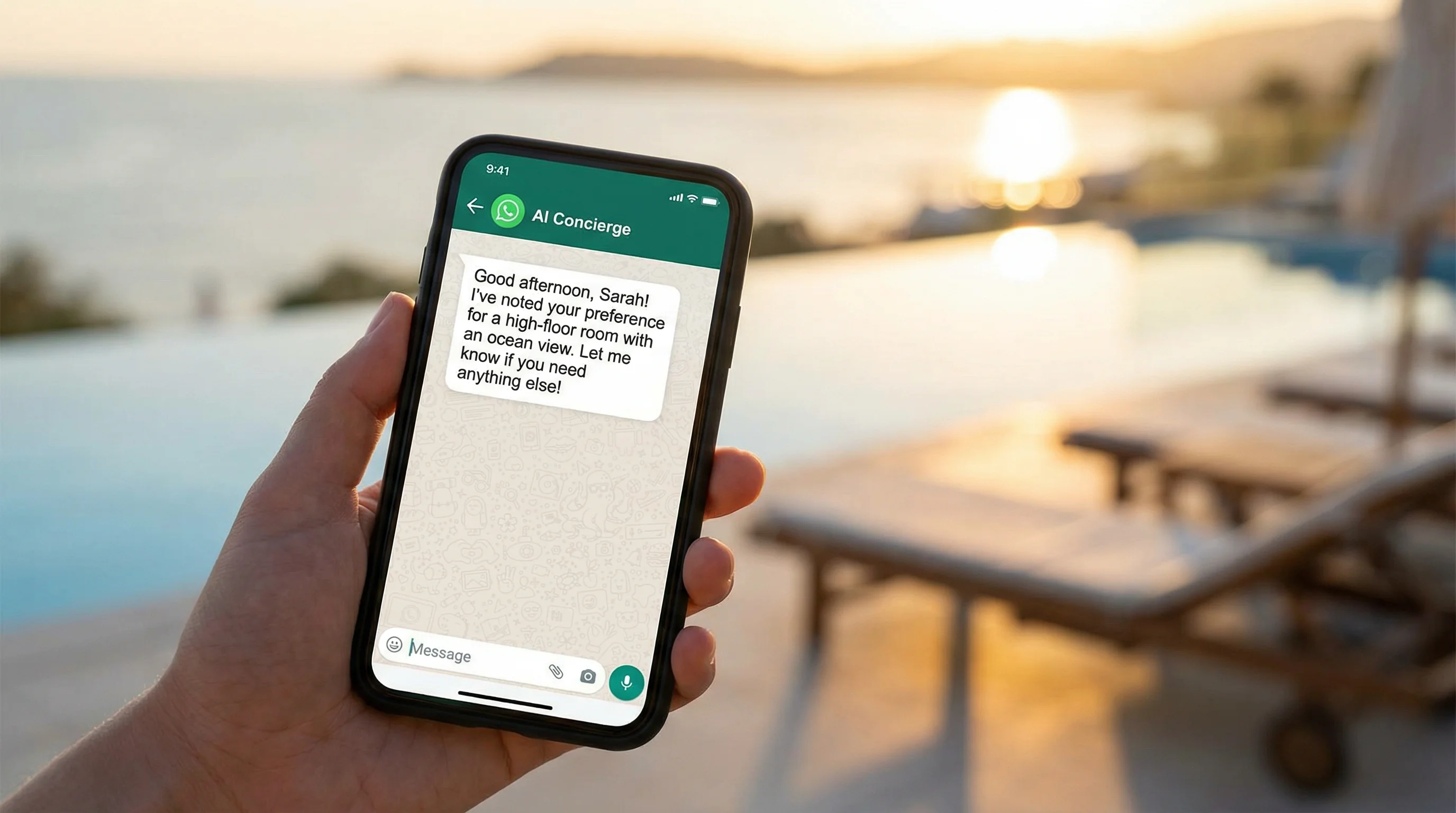
- Does it work across all your channels? Guests contact hotels via WhatsApp, web, email, QR codes at check-in, and the TV in the room. Your AI should have one brain across all of them - not separate disconnected bots per channel.
The Inequality Is Gone
For decades, premium hospitality was pay-to-play. The guests at the Four Seasons got remembered. The guests at the family-run coastal hotel got a smile and a key card.
AI closed that gap. The technology to remember every guest, anticipate every need, and make every stay feel personal - that now costs a fraction of what it used to. It is available to the 40-room boutique hotel on the same terms as the 500-room resort.
This does not mean the big resorts lose their advantages. But it means small hotels have one less reason to apologize for their size.
You just need to choose the right technology.