Here's a scene that plays out in every hotel, every single day: a Japanese family arrives at reception at the same time as a German couple and a group from Brazil. The front desk speaks English and maybe one other language. Everyone waits. Everyone's frustrated. Nobody's experience starts well.
Now multiply that across check-in rushes, room service requests at 2 AM, last-minute spa bookings, and the 47th time someone asks for the WiFi password today. The traditional concierge model doesn't scale. It never did. Hotels are finally doing something about it.
The Problem Nobody Talks About
Hospitality runs on a paradox: the industry that promises personalized service relies on humans who work shifts, speak limited languages, forget guest preferences, and can only handle one conversation at a time.
The numbers tell the story:
- 72% of international guests prefer communicating in their native language — but most hotel staff speak two or three at best.
- 65% of guest complaints stem from slow response times, not the actual problem itself.
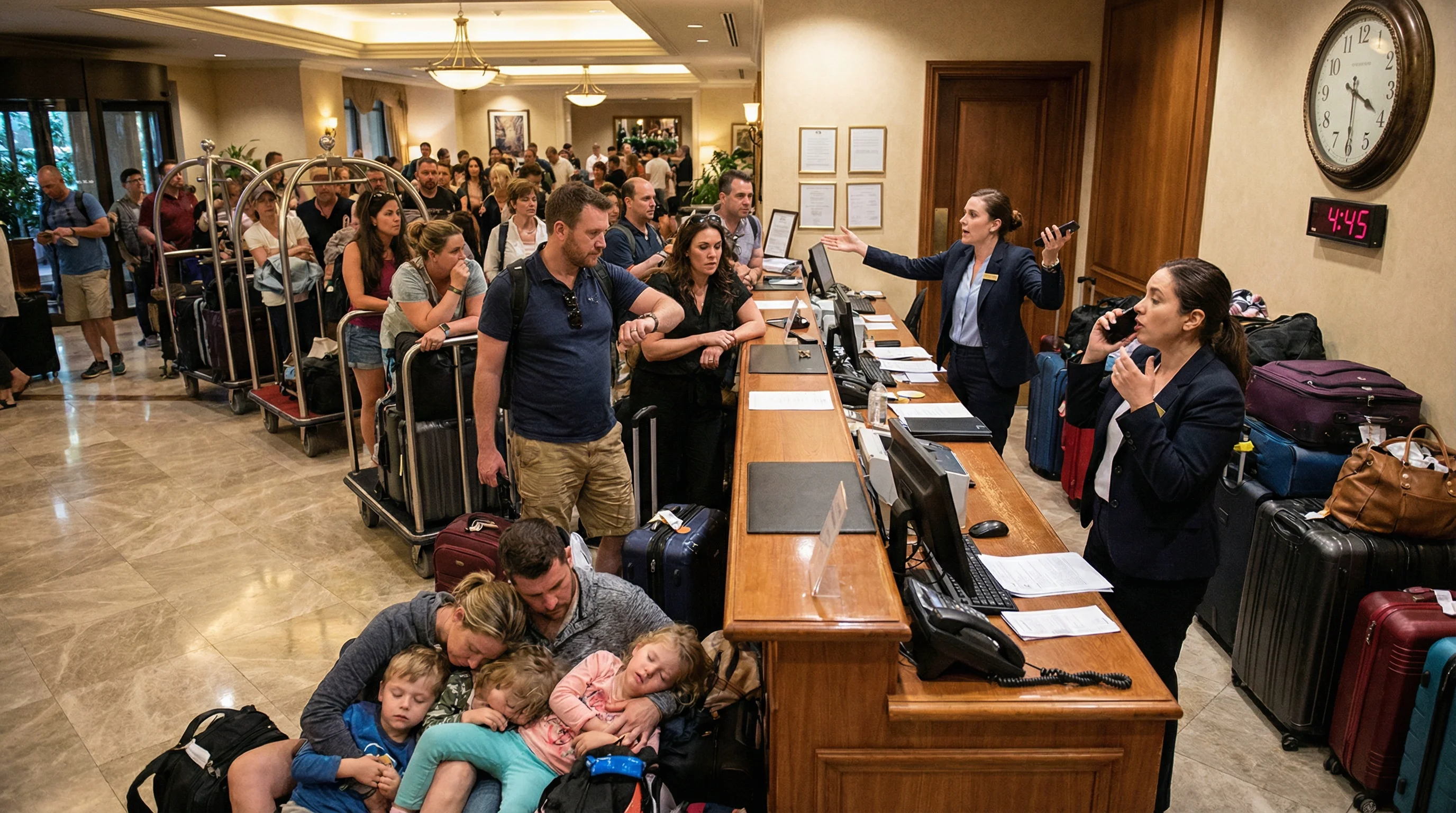
- The average concierge handles one guest at a time. During peak hours, that creates queues that directly hurt satisfaction scores.
Your concierge goes home at 10 PM. Your guests don't. The guest who needs a restaurant recommendation at midnight, the traveler whose flight changed at 3 AM, the family that wants breakfast delivered early — they're all waiting for someone who isn't there.
What an AI Concierge Actually Does
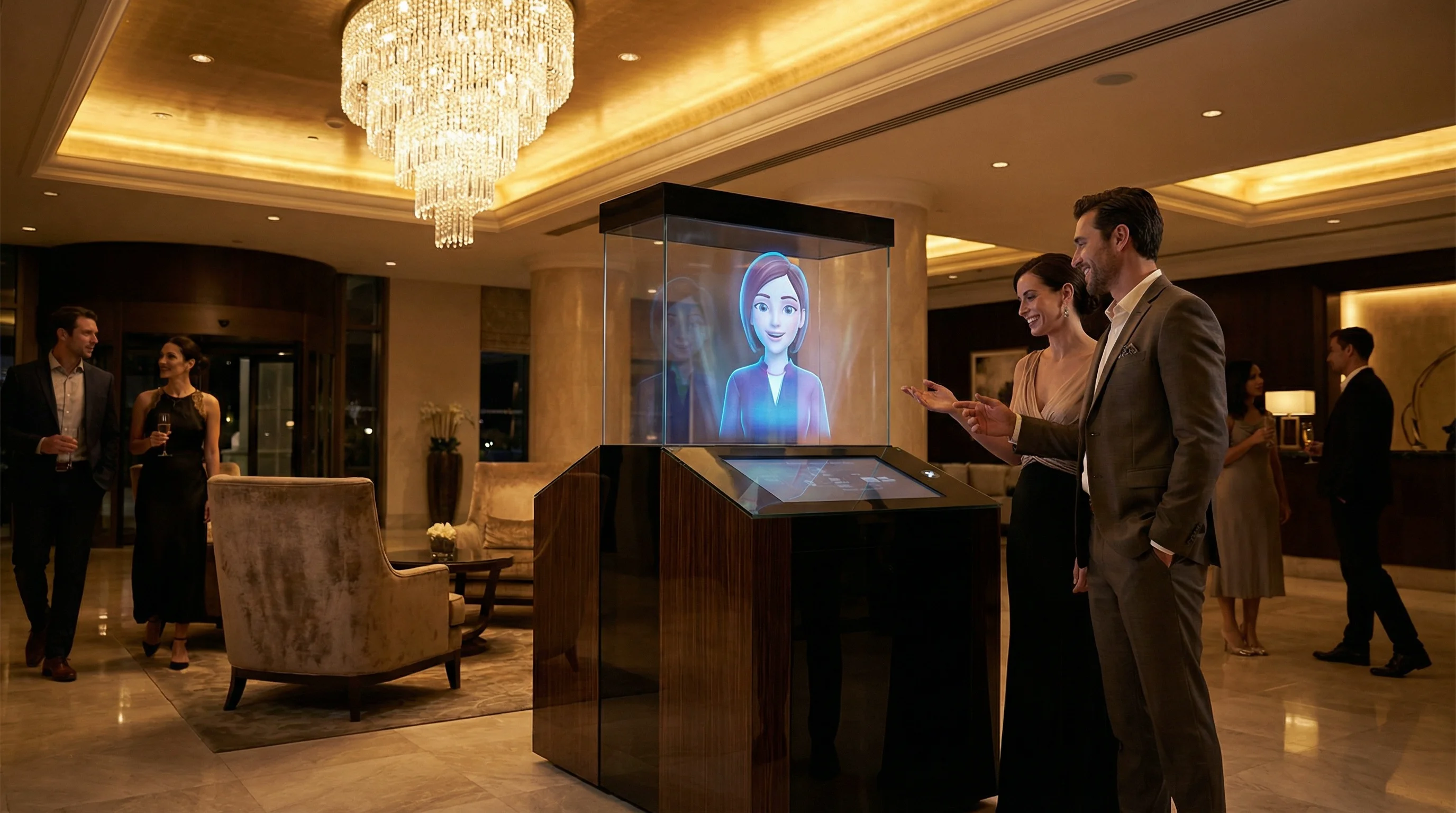
This isn't a chatbot that tells you "Please contact the front desk." An AI concierge is a fully autonomous agent that connects to your hotel's systems and takes real actions on behalf of your guests.
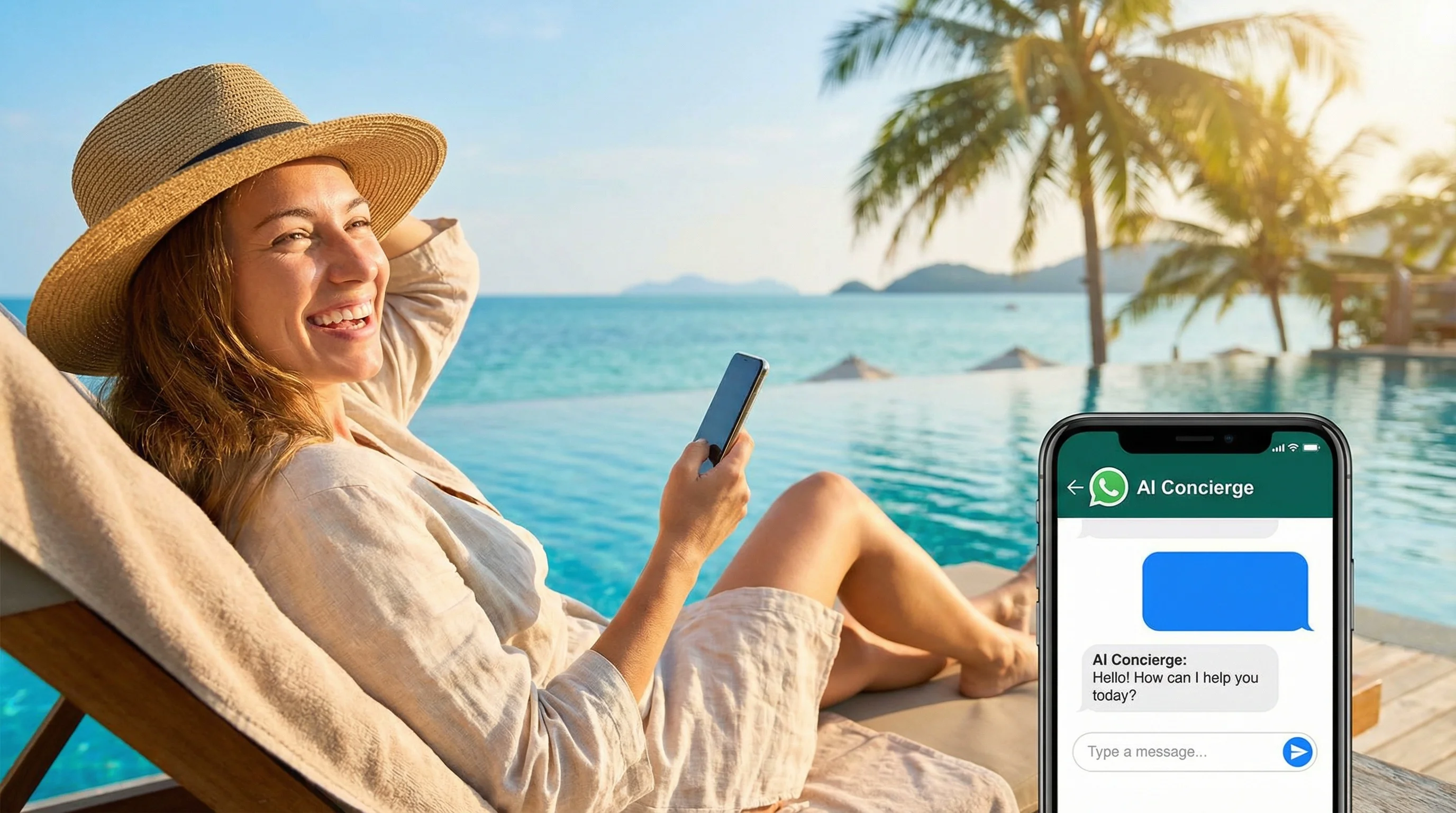
A guest sends a WhatsApp message: "Can I get a late checkout and a car to the airport tomorrow at 2 PM?"
The AI concierge — let's call her Emma — checks your PMS for room availability, extends the checkout to 2 PM, books the airport transfer through your transport system, charges it to the guest's room folio, and sends a confirmation with the driver's name. All within seconds. No human involved.
That's not a futuristic concept. That's what hotels running Lycia AI are doing right now. Here's what it handles, end-to-end:
- Room service orders — processed and sent to your kitchen system automatically.
- Spa and restaurant bookings — real-time availability, instant confirmation.
- Checkout extensions, room upgrades, early check-in — executed directly in your PMS.
- Airport transfers and local transport — booked and confirmed with driver details.
- Local recommendations — restaurants, attractions, directions, all personalized to the guest.
- Complaint handling — proactive check-ins during the stay catch issues before they hit TripAdvisor.
One Brain, Every Channel, 140+ Languages
The real power isn't just automation — it's omnipresence. Your AI concierge operates across every channel your guests use: WhatsApp, Telegram, web chat, QR codes at the lobby, SMS, and voice. Same AI, same context, zero repetition.
A guest starts a conversation on the web chat during booking. Arrives at the hotel and scans a QR code. Messages via WhatsApp from the pool. The AI knows exactly who they are every time. It remembers their name, their preferences, their allergies, their room number — across every interaction, across every visit.
And it does all of this in 140+ languages simultaneously. That Japanese family? Handled in Japanese. The German couple? German. The Brazilian group? Portuguese. All at the same time. No translator needed. No awkward miscommunication.
An AI concierge doesn't just answer faster — it remembers every guest, speaks every language, and works every shift. Your human team becomes the premium layer, not the first line of defense for WiFi passwords.
The Numbers Hotels Actually Care About
Guest experience matters. But GMs approve budgets based on numbers. Here's what hotels deploying AI concierges are seeing:
| Metric | Before AI | After AI |
|---|---|---|
| Operational Costs | Baseline | 60% reduction |
| Response Time | 4-15 minutes | Under 5 seconds |
| Languages Supported | 2-3 | 140+ |
| Availability | 6 AM - 10 PM | 24/7/365 |
| Simultaneous Guests | 1 per staff | 500+ |
| Guest Preference Recall | Inconsistent | 100% — every visit |
| Upsell Conversion | Rare (staff too busy) | Proactive, personalized |
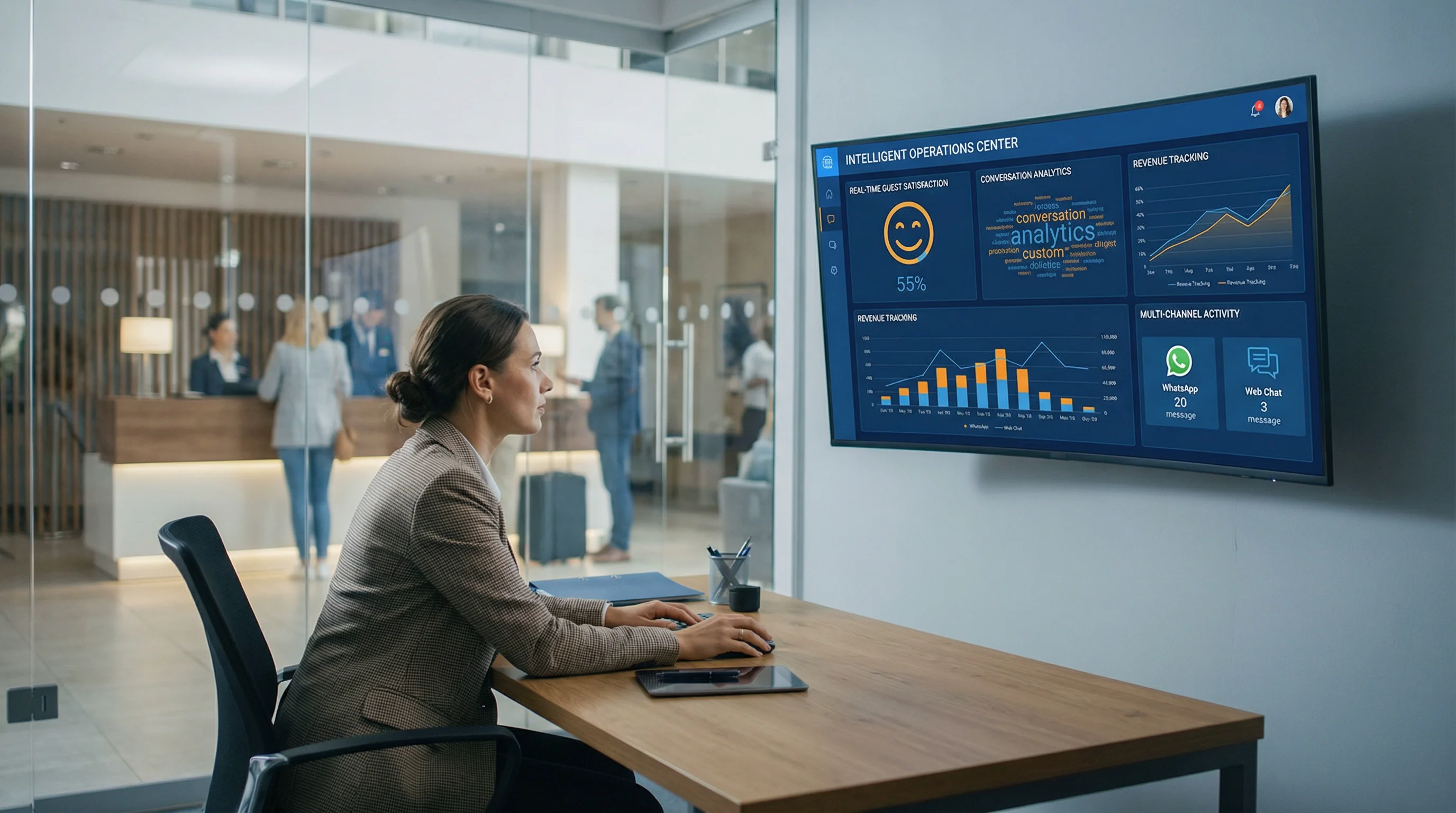
The 60% OPEX reduction gets the most attention, but the real story is what happens to revenue. When your AI proactively suggests a spa treatment to a guest who booked one last time, or recommends the premium room upgrade to a returning VIP, you're not just saving money — you're making it.
What About the Human Touch?
This is the first question every hotelier asks, and it's the right one. Hospitality is human. A warm smile at check-in, a hand-written welcome note, a bartender who remembers your name — that's irreplaceable.
But answering "What's the WiFi password?" for the 200th time today isn't the human touch. It's a waste of the human touch.
AI concierges handle the repetitive 80% — the WiFi questions, the towel requests, the checkout time inquiries, the "where's the gym?" conversations. That frees your staff to do what they were hired to do: create moments. Handle the VIP who needs something special. Resolve the complaint that needs empathy, not a scripted response. Be genuinely present for the interactions that matter.
Your staff forgets. Your AI never does. But your AI can't replace a genuine human connection. The best hotels use both.
How It Connects to Your Existing Systems
An AI concierge is only as useful as the systems it can access. Through the Model Context Protocol (MCP), Lycia AI connects directly to your existing hotel infrastructure:
- PMS — Opera, Protel, Mews, Cloudbeds. Read guest profiles, modify reservations, manage folios.
- POS — Restaurant and spa billing routed automatically.
- Booking Engine — Direct reservation modifications without third-party friction.
- Transport & Activities — Airport transfers, tour bookings, local services.
- Knowledge Base (RAG) — Your hotel's policies, menus, floor plans, local guides — always current, always accurate.
No rip-and-replace. No 12-month integration project. Lycia AI is ready in 2-3 weeks, working alongside your existing tech stack from day one.
Is Your Hotel Ready?
The shift isn't coming. It's here. Hotels that move now are building guest preference databases, training their AI on their specific operations, and creating competitive advantages that compound over time. Every guest interaction makes the AI smarter. Every remembered preference makes the next visit better.
Hotels that wait will spend the next two years watching their competitors deliver experiences they can't match — with half the staff cost.
The question isn't whether AI concierges work. It's whether your hotel can afford to be the last one without one.