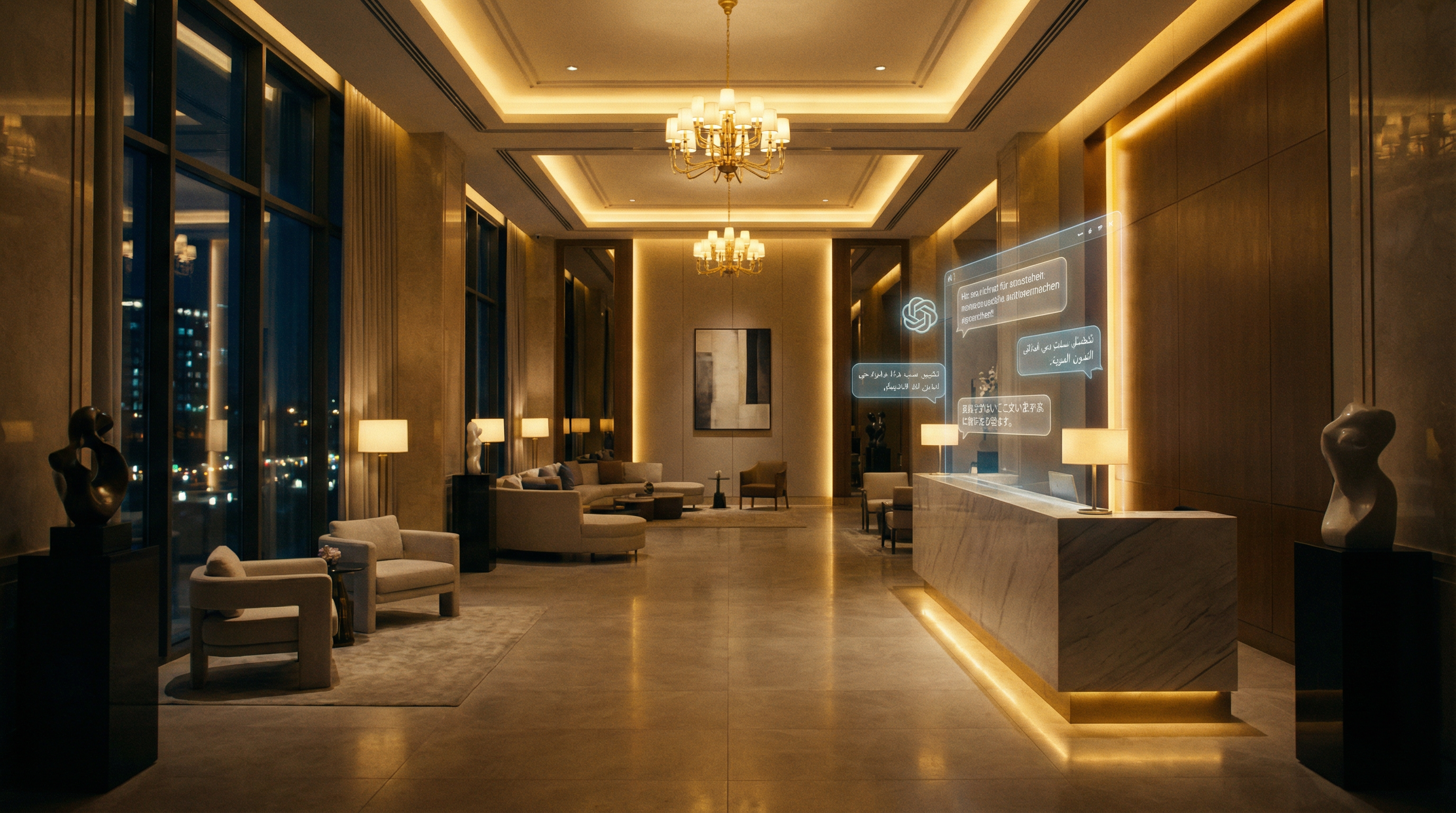
Your front desk gets 400+ calls a day. Your chatbot can't even book a table. Here's what agentic AI is actually doing inside hotels right now — and why your guests already expect it.
If you manage a hotel and you still think "AI" means a chatbot that greets guests with "Hello! How can I help you today?", you're already behind. Not by months. By a generation.
Agentic AI in hospitality is live, deployed, and generating measurable returns at properties worldwide — from luxury resorts in Las Vegas to budget-focused chains across Europe. The difference between what's possible today and what most hotels are running is not incremental. It's structural.
This post breaks down what agentic AI actually is, where it's already working, what the numbers look like, and how to think about it when it's your turn to decide.
What Is Agentic AI? (And Why It's Not Just a Smarter Chatbot)
Agentic AI is AI that acts — not just responds.
A standard AI or chatbot receives a question and generates a reply. That's it. The guest asks "Do you have a sea-view room available July 23rd?" and the bot says "Please contact our reservations team." Pointless.
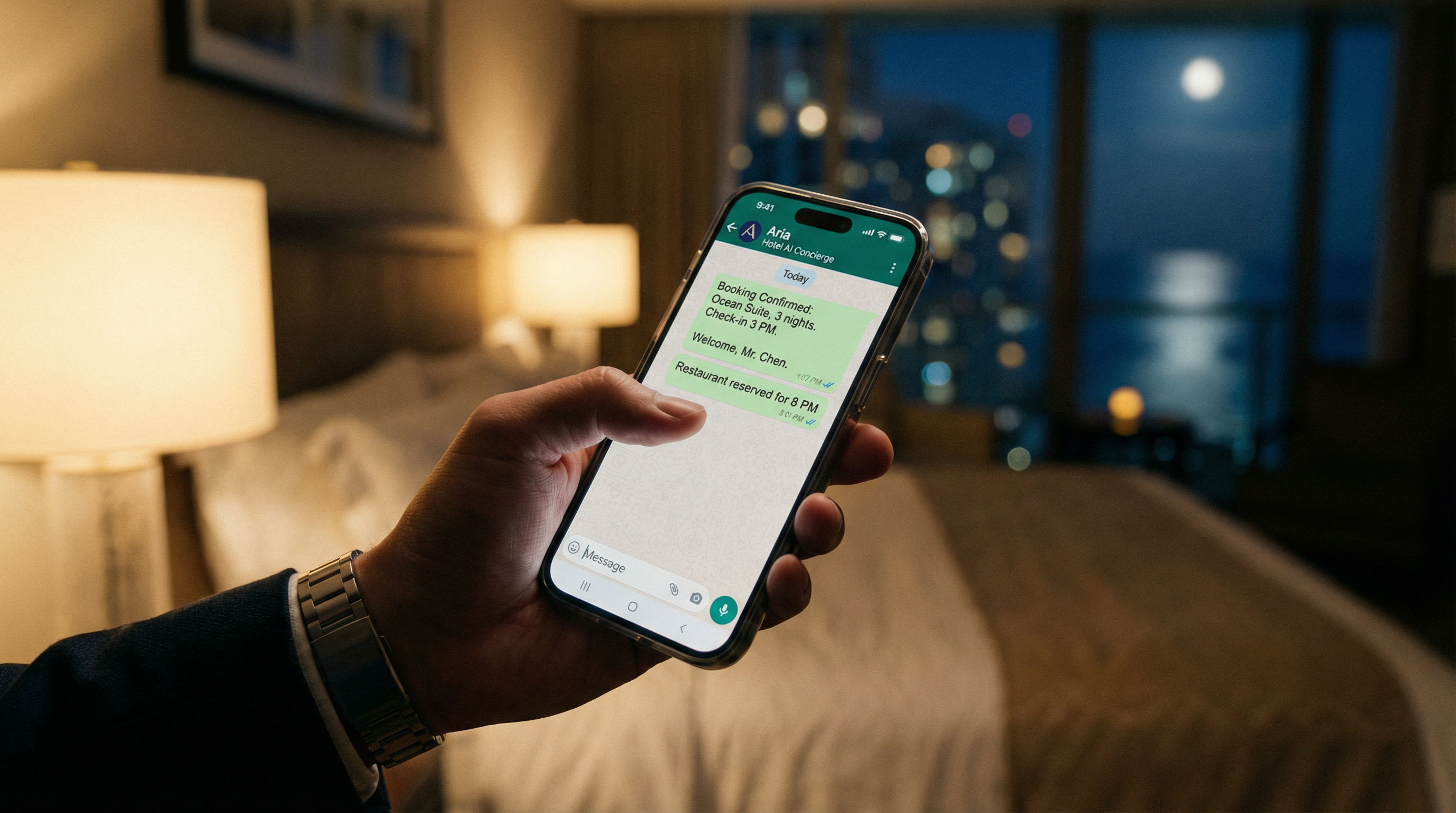
An agentic AI system receives the same question, checks availability in real-time via your PMS, confirms the room, processes payment, sends a confirmation to the guest's WhatsApp, and flags the booking in your CRM — without a human touching it.
The four things that make AI "agentic":
1. Tool Calling — The AI can call external systems and APIs. It doesn't just know things; it does things. Book a room. Charge a card. Update a profile. Send an email. Open a service ticket.
2. Persistent Memory — The AI remembers every guest, every preference, every stay. Not session-level memory. Permanent records. "Welcome back, Mr. Chen. Sea-view room, egg allergy noted, late checkout preferred — should I arrange the same?"
3. RAG (Retrieval-Augmented Generation) — The AI is trained on your data: your room types, your menus, your policies, your pricing. It's not guessing. It knows exactly what's in your restaurant on Tuesday nights and what your cancellation policy says.
4. Autonomy with Multi-Step Planning — Agentic AI can chain actions together. A guest asks for a spa appointment. The AI checks availability, offers three slots, confirms the booking, notes the guest's preference for hot stone treatment, and sends a prep reminder 2 hours before — all in one conversation thread.
This is the technical gap between what your current chatbot does and what agentic AI actually is. If you want a deeper breakdown of how AI agents differ from basic chatbots, read our post on chatbots vs. AI agents.
Agentic AI vs. Traditional AI: The Honest Comparison
| Feature | Traditional Chatbot / GenAI | Agentic AI |
|---|---|---|
| What it does | Answers questions | Takes actions |
| Memory | Forgets after each session | Remembers permanently |
| Integration | Standalone, no system access | Connected to PMS, CRM, POS, payment systems |
| Booking capability | Redirects to staff | Completes booking end-to-end |
| Languages | 2-5, mediocre quality | 100+ with native fluency |
| Response time | Instant, but limited | Instant and actually useful |
| Availability | 24/7 (but low value) | 24/7 (high value) |
| Upselling | None | Context-aware, proactive |
| Personalization | Zero | Deep, based on history |
| Works at 3am | Says "office hours are 9-5" | Books the room, takes the order |
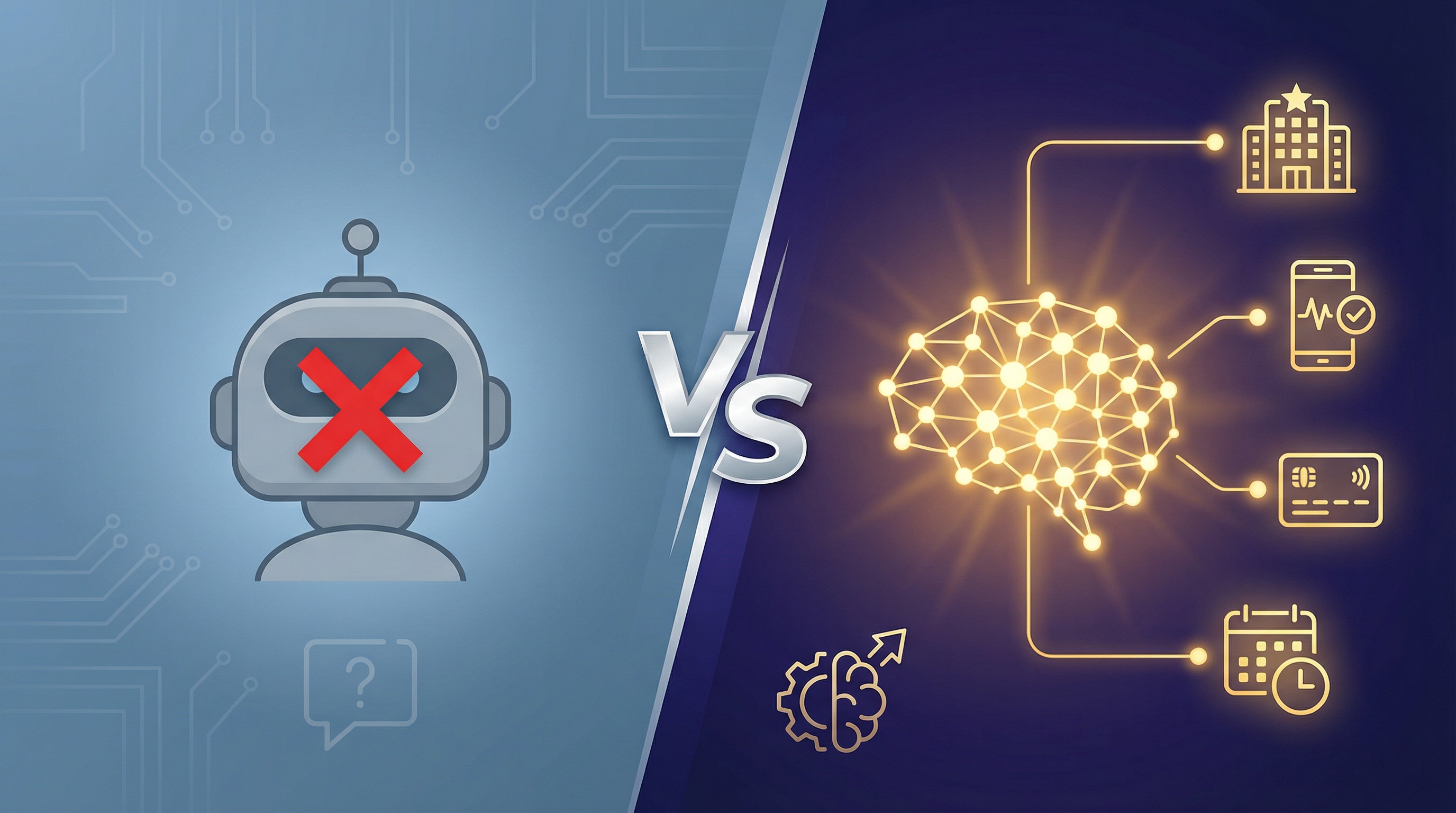
The column on the right is not a product spec from some future tech demo. These are capabilities deployed at real hotels today. The comparison of agentic AI vs GenAI is one of the most-searched topics in tech right now — and in hospitality, the distinction is everything.
Agentic AI Examples in Hospitality That Are Actually Working
1. The Cosmopolitan Las Vegas — "Rose"
The Cosmopolitan's AI concierge, Rose, launched via SMS. Guests text Rose for anything: restaurant reservations, show tickets, pool cabanas, late checkouts, cocktail recommendations. Rose has a distinct personality — irreverent, playful, on-brand — and handles thousands of guest requests per month without a human in the loop.
What makes Rose an agentic AI use case: she doesn't just provide information. She executes. Table booked. Ticket confirmed. Upgrade processed. This is the model that every luxury hotel GM should study.
2. Edwardian Hotels UK — "Edward"
Edwardian Hotels deployed Edward, an AI virtual assistant accessible via SMS and the hotel's website. Edward handles room service requests, housekeeping coordination, restaurant bookings, and general guest queries. According to Edwardian, Edward manages over 60% of guest communications without human intervention.
The key stat: guests don't notice the difference in service quality. They notice it's faster.
3. Marriott's Agentic Booking Layer
Marriott has been building its AI capabilities quietly. Their backend now uses AI to drive dynamic pricing, personalized offers, and predictive availability management across 8,000+ properties. The front-facing chatbot integration on their app handles thousands of requests daily — with the agentic layer routing complex requests, triggering loyalty actions, and updating guest profiles autonomously.
4. Shangri-La Hotels — Guest Preference Engine
Shangri-La operates across 100+ properties and uses an AI system that tracks guest preferences globally. A guest who stayed in Hong Kong and mentioned they prefer hypoallergenic pillows will have those waiting in their Singapore room — automatically, without a staff briefing. The AI reads the profile, triggers the request, and verifies completion.
That's not automation. That's agentic AI doing what a great concierge does — but across 100 locations, 24/7, without a single briefing call.
5. Radisson Hotel Group — Direct Booking Agent
Radisson deployed an AI agent on their website that handles direct booking conversations. The result: a 30% increase in direct booking conversion rates at properties where it was rolled out. For context, OTA commissions run 15–25% per booking. Every direct booking saved through AI is pure margin.
6. citizenM Hotels — The Human-Free Check-In
citizenM took the agentic approach to arrival. Over 90% of guests check in via kiosk or app, managed by an AI layer that handles room assignment, payment processing, keycard activation, and preference-based room selection. Staff are freed entirely for concierge-style interaction — the conversations that actually build loyalty.
For more on how hotels are restructuring their operations around AI, see our piece on AI taking over hotel operations.
The Numbers: What Agentic AI Actually Delivers
These are the figures hotel operators need in front of them when making this decision.
Operational Cost Reduction
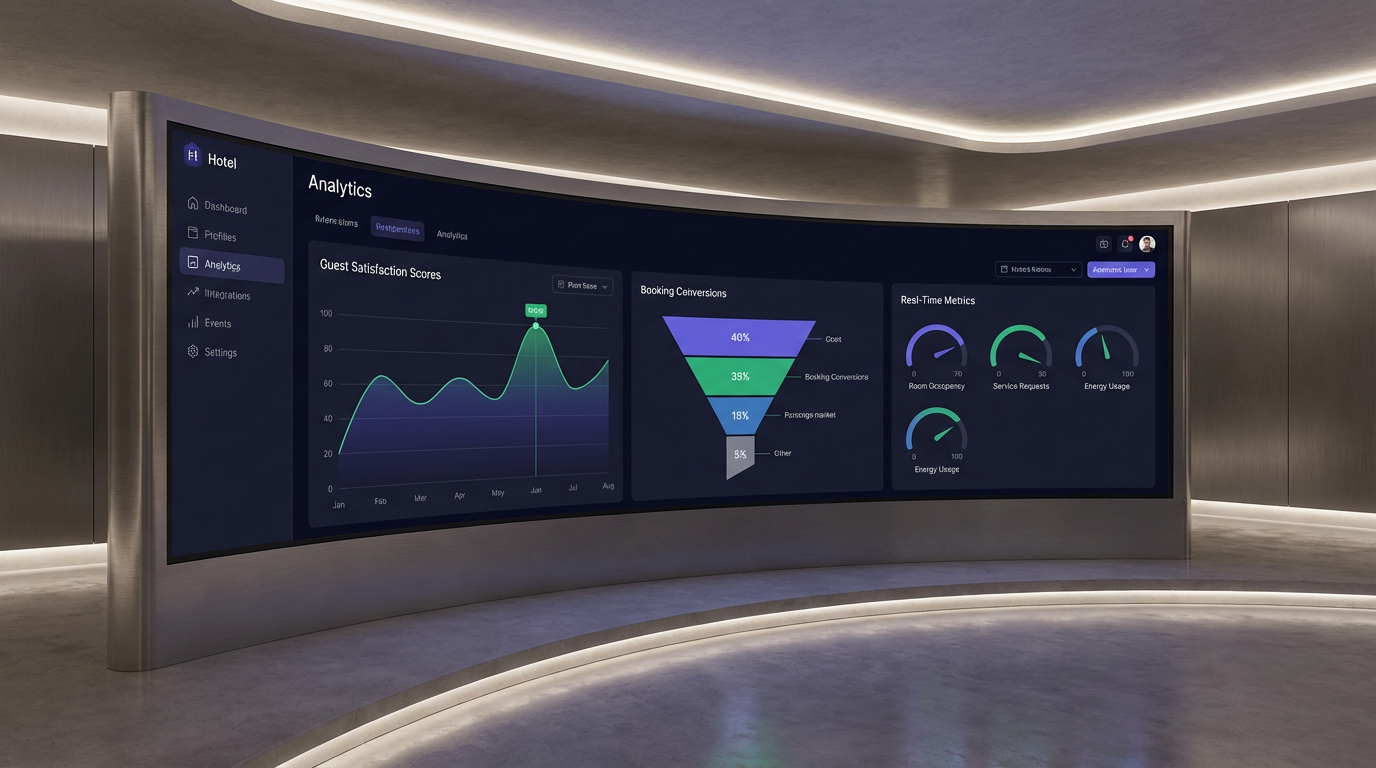
McKinsey estimates AI can automate 30% of hospitality and foodservice tasks — which translates directly into labor cost reductions or staff redeployment. Properties deploying agentic AI report front-of-house team headcount optimization of 20–40% for routine query handling.
Revenue Impact
Deloitte research shows personalization drives 20%+ in additional revenue per guest. Hotels using AI-powered upselling (room upgrades, spa packages, late checkout offers triggered at the right moment) see ancillary revenue increase of 10–20%. Agentic AI's advantage here is timing — it knows when to offer the upgrade because it's tracking the full guest journey in real time.
Direct Booking Uplift
With AI handling direct booking conversations, the typical result is a 25–35% improvement in website booking conversion. Given OTA commission structures, this is where the ROI math gets compelling fast. One mid-size property booking 50 additional direct rooms per month at $200 average rate saves $150,000–$300,000 in annual commission.
Guest Satisfaction
Oracle's 2023 Hospitality survey found that 73% of guests want more AI/automation from their hotels — specifically for speed and personalization. Juniper Research projects AI will save the hospitality industry $11 billion annually by 2025, largely through operational efficiency and service quality improvements.
Response Time
A human front desk agent handles 400–600 calls and queries per day on average, with peak bottlenecks during check-in/out windows. An agentic AI system handles unlimited simultaneous conversations with sub-second response times and no hold music. For guests used to instant everything, this is table stakes.
What to Look for When Evaluating an Agentic AI Platform
Not everything marketed as "agentic AI" actually is. Here's what separates a real agentic system from a chatbot with better marketing:
Real system integration (not simulated) — The AI must connect to your actual PMS, CRM, and payment systems. If it can't query live data and write back to your systems, it's not agentic — it's a fancy FAQ bot. Ask vendors specifically: what systems do you connect to, and via what protocol?
Persistent guest memory — The system should build a permanent, property-agnostic guest profile. Allergies, preferences, visit history, loyalty data. If a guest stays twice and the AI doesn't recognize them, the vendor hasn't solved the memory problem.
Multi-channel presence — Agentic AI needs to meet guests where they are: WhatsApp, the website, voice, QR codes in-room, kiosk. A system that only works on your website misses 70%+ of guest touchpoints.
Proactive outreach capability — True agentic AI doesn't just respond — it initiates. Pre-arrival messages, upsell offers at the right moment, post-stay re-engagement. If the AI only responds when spoken to, it's reactive, not agentic.
Clear ROI timeline — Any reputable vendor should be able to model your ROI within 30 days of deployment. If they can't, they don't have the data. Typical break-even: 3–6 months.
If you're evaluating platforms specifically for concierge replacement, read our breakdown on hotels replacing the concierge with AI.
Agentic AI Nedir?
Bu bölüm, "agentic AI nedir" diye araştıran Türk okuyucular için Türkçe yazılmıştır.
Agentic AI (Ajantik Yapay Zeka), sadece soruları yanıtlamakla kalmayıp gerçek eylemler gerçekleştirebilen yapay zeka sistemlerini tanımlar. Klasik chatbot'lar ve ChatGPT gibi üretici AI (Generative AI) araçlarından temel farkı şudur: üretici AI size bir yanıt üretir, ajansal AI ise bir görevi tamamlar.
Otel sektöründe şöyle düşünün: Klasik bir chatbot misafire "Oda rezervasyonu için lütfen resepsiyonumuzu arayın" der. Ajantik bir AI sistemi ise aynı konuşma içinde rezervasyonu tamamlar, ödeme bağlantısı gönderir, CRM'de profili günceller ve misafiri WhatsApp üzerinden onaylar — hiçbir insan müdahalesi olmadan.
Ajantik AI'yi diğerlerinden ayıran dört teknik özellik vardır:
1. Araç Kullanımı (Tool Calling): Sistem dışarıdaki servisleri çağırabilir. Otel yönetim yazılımına bağlanır, gerçek zamanlı müsaitlik sorgular, rezervasyon oluşturur.
2. Kalıcı Hafıza: Sistem her misafiri hatırlar. Alerjiler, tercihler, önceki konaklamalar — hepsi kalıcı olarak saklanır. Misafir tekrar geldiğinde "Sizi tanıyoruz" deneyimi yaşanır.
3. RAG (Retrieval-Augmented Generation): AI, sizin belgeleriniz üzerinde eğitilir. Oda tipleri, menüler, politikalar — bunları bilir ve yanlış bilgi vermez.
4. Özerk Planlama: Çok adımlı görevleri otomatik tamamlar. Spa rezervasyonu yap, misafiri hatırlat, geri bildirim iste — tek bir konuşmadan.
Türkiye'deki oteller için bu teknoloji özellikle kritik: yüksek uluslararası misafir oranı, dil bariyerleri ve mevsimsel personel dönüşümü sorunları ajansal AI ile doğrudan çözülebilir. 140'tan fazla dil desteği ve 7/24 çalışma kapasitesiyle ajantik AI sistemleri, özellikle Antalya, Bodrum gibi turizm merkezlerindeki oteller için stratejik bir yatırım haline gelmiştir.
Agentic AI in Hospitality — Frequently Asked Questions
What is agentic AI in hospitality?
Agentic AI in hospitality refers to AI systems that can take autonomous actions — booking rooms, processing payments, coordinating housekeeping, managing guest preferences — without human involvement. Unlike basic chatbots that only answer questions, agentic AI systems are connected to hotel management software, remember guests permanently, and complete multi-step tasks end-to-end.
How is agentic AI different from a regular hotel chatbot?
A hotel chatbot responds to questions with pre-programmed or AI-generated text. An agentic AI system acts on those questions — querying live availability, completing bookings, charging cards, and sending confirmations. Chatbots are information channels. Agentic AI is an operational layer. See our full comparison in chatbots vs. AI agents.
Which hotel chains are using agentic AI right now?
Marriott, Hilton, Shangri-La, Radisson, citizenM, Edwardian Hotels, and The Cosmopolitan (Las Vegas) all have active AI deployments. The sophistication varies — from basic booking automation to full agentic systems managing the end-to-end guest journey. The gap between early adopters and the rest is widening quickly.
What ROI can hotels expect from agentic AI?
The numbers vary by property size and implementation scope, but the common benchmarks: 20–40% reduction in routine query handling costs, 25–35% improvement in direct booking conversion, 10–20% increase in ancillary revenue through AI upselling, and operational payback within 3–6 months. The largest ROI driver for most properties is OTA commission savings from direct booking uplift.
What's the difference between agentic AI and GenAI for hotels?
GenAI (generative AI) creates content — it can write a welcome email or generate a response. Agentic AI goes beyond generation to execution — it can book the room, charge the guest, and update five connected systems. Most GenAI tools require a human to review and act on their output. Agentic AI acts autonomously within defined parameters.
How long does it take to deploy agentic AI in a hotel?
With a modern platform using standardized integration protocols (like MCP — Model Context Protocol), deployment typically takes 2–4 weeks. This includes system integration with your PMS and CRM, training the AI on your property data, channel setup (WhatsApp, web, voice, QR), and testing. Complex multi-property deployments take longer.
Where Does This Leave You?
The hospitality industry moves slowly on tech adoption — and then all at once. Right now, the early movers on agentic AI are stacking advantages in direct bookings, guest loyalty, and operational efficiency that compound over time.
Guests who experience truly agentic AI — the kind that remembers their allergy, books their table without being asked, and sends a transfer request the moment their flight lands — don't go back to filling out forms or waiting on hold.
If you're ready to see what an agentic AI system built specifically for hospitality looks like in practice, talk to the Lycia team. We'll show you a live demo with your property's use cases, not a generic slide deck.
Lycia AI builds agentic AI agents for hotels, airports, malls, and restaurants. Our AI agents think, remember, and act — so your team can focus on what AI can't do.