
Airports do not earn more simply because passengers receive more recommendations. They earn more when the right passenger discovers a relevant business, can realistically use its services, completes a transaction, and generates income the airport actually retains.
That is the commercial opportunity for an airport AI assistant: connecting passenger intent to useful action, rather than placing another advertising surface between the passenger and the gate.
An airport AI assistant can help increase airport revenue by turning passenger questions into relevant referrals, appropriate upsells and complementary cross-sells — and by measuring which of those actions produce verified, airport-retained income. The commercial objective is incremental airport revenue, not simply more conversations or clicks.
For airport commercial, retail and digital-transformation teams asking how to increase airport revenue, the practical answer is to connect five elements: passenger needs, operational context, relevant businesses, supported transactions and reliable measurement. Referrals create discovery. Appropriate upselling offers a better-fit service. Cross-selling connects complementary purchases. Together, these mechanisms can support non-aeronautical revenue growth — provided the airport validates the economics and protects the passenger journey.
This guide explains how to build that model. The passenger scenarios below are illustrative, not reported customer deployments or revenue results. Transaction capabilities depend on the systems, permissions and commercial agreements established for each deployment.
Why More Passengers Do Not Automatically Mean More Revenue
Passenger volume matters, but it is not a complete commercial strategy. A passenger can pass through a terminal without discovering a suitable restaurant, understanding lounge access, or finding the travel essential they need.

ACI World's May 2025 analysis reports that non-aeronautical activities accounted for 36.7% of total airport revenue in 2023, and that passenger recovery and commercial-revenue recovery did not move in lockstep. These are historical figures with an explicit reference year, not a statement about 2026 performance.
Non-aeronautical revenue is commercial income beyond aviation-related charges — retail concessions, food and beverage, parking, property and other services. ACI identifies personalized offers, premium lounges and mobile commerce as part of the growth opportunity.
The useful question is therefore not just "How do we bring more people through the airport?" It is also:
How do we help the passengers already here find something worth buying, without making their journey harder?
An assistant can address that question at the moment a need becomes explicit — "I need lunch," "I forgot my charger," or "Where can I work quietly?" Each request is an opportunity to solve a real problem. Revenue should follow that solution, not replace it.
From Airport Chatbot to Commercial Assistant
An airport chatbot can explain where a shop is. A commercially useful assistant should also help determine whether that shop is relevant, accessible and practical for this passenger now.
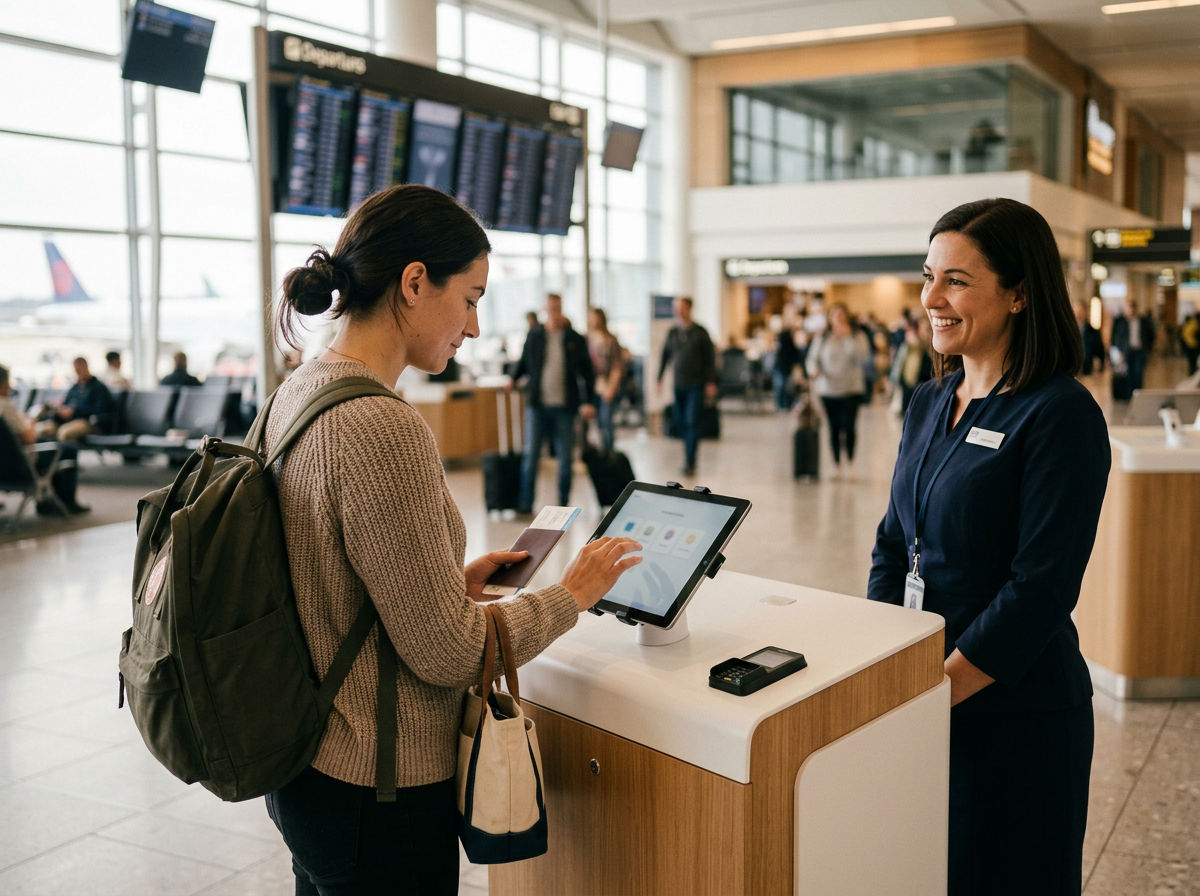
Consider the difference:
- Information: "There are several cafés in the terminal."
- Relevant referral: "Here are cafés in your departure area that fit the route you described."
- Supported action: "This café offers collection ordering through its booking page; here are the current options."
- Verified outcome: A completed order or redemption is recorded through an agreed attribution method.
Some airport AI vendors already combine passenger information with targeted marketing, chat-based sales and back-office integrations. That makes "our assistant answers questions" an insufficient claim on its own — the distinguishing factor is how far the service reliably takes the passenger, and what evidence exists that the next action happened.
Where integrations are unavailable, the assistant can still provide verified directory information and merchant links. It must not present an unverified opening time as live, claim an item is in stock without a reliable source, or describe a payment link as a confirmed booking.
Turn Passenger Questions into Referrals to Airport Businesses
A referral directs a passenger toward a relevant business or service. Its value comes from matching intent with a feasible next step, not merely displaying a retailer's name.
A practical workflow is:
Passenger need → time and access checks → relevant business → optional transaction → verified commercial outcome.
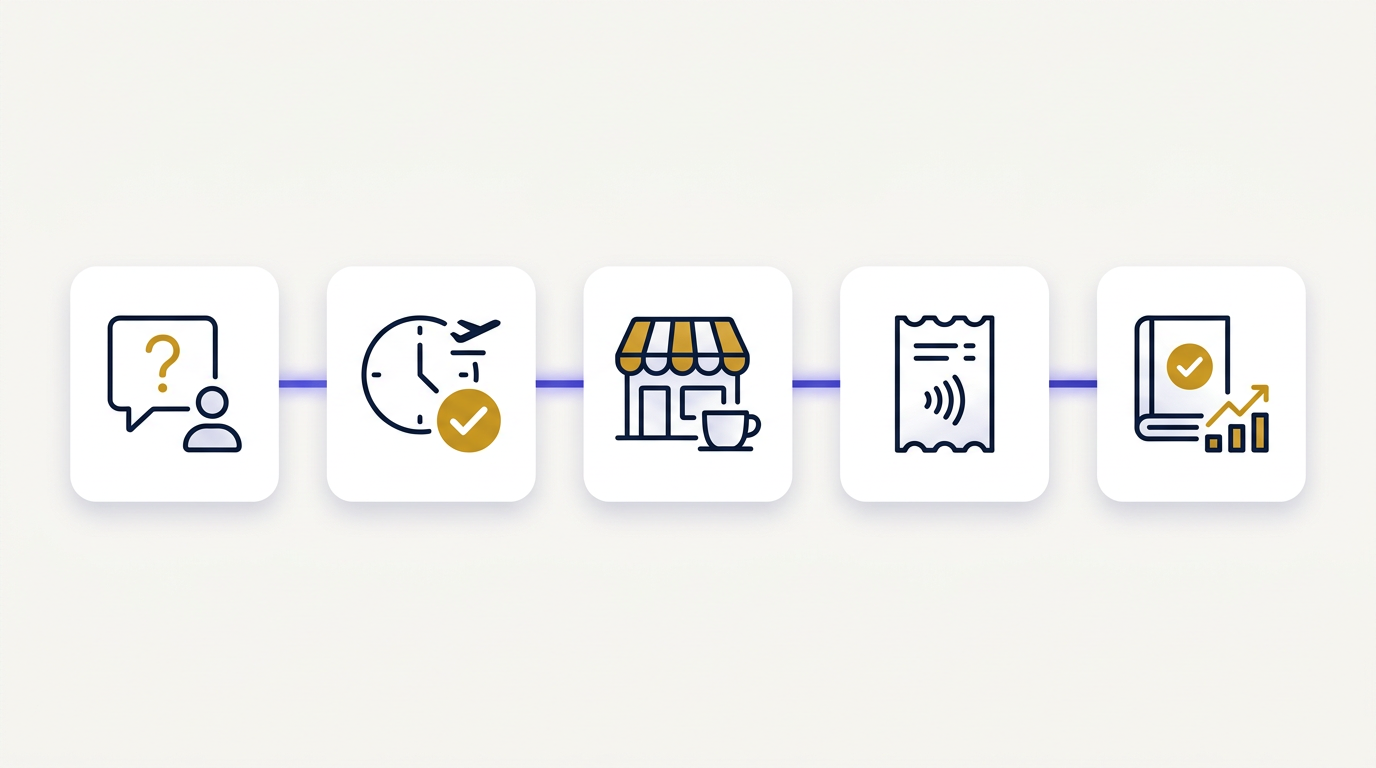
Understand the need before choosing the merchant
"I need something to eat" is not enough to rank every restaurant. A useful assistant may need to establish whether the passenger wants a takeaway meal, has a dietary requirement, is travelling with children, or needs to remain near the gate. Ask only what is necessary — a terminal location and a stated preference may be enough; a detailed passenger profile should not be a prerequisite for a useful recommendation.
Apply eligibility rules before commercial ranking
A recommendation should pass practical checks before sponsorship or merchant margin influences its position:
- Is the business in an area the passenger can access?
- Is it open, and is the relevant service available?
- Does the route fit the passenger's mobility and access requirements?
- Is there enough time for walking, ordering, fulfilment and onward travel?
- Does the offer meet the passenger's stated need and budget?
Use reliable operational information and conservative buffers where available. Departure time is not the same as the time a passenger must be at the gate. If the necessary information is missing, explain the uncertainty rather than offering reassurance the system cannot support.
Wayfinding and retail-discovery platforms already combine store locations, parking, pre-ordering and premium services into a single passenger journey; airport commercial teams evaluating an assistant should expect at least that level of practical integration before layering commercial ranking on top.
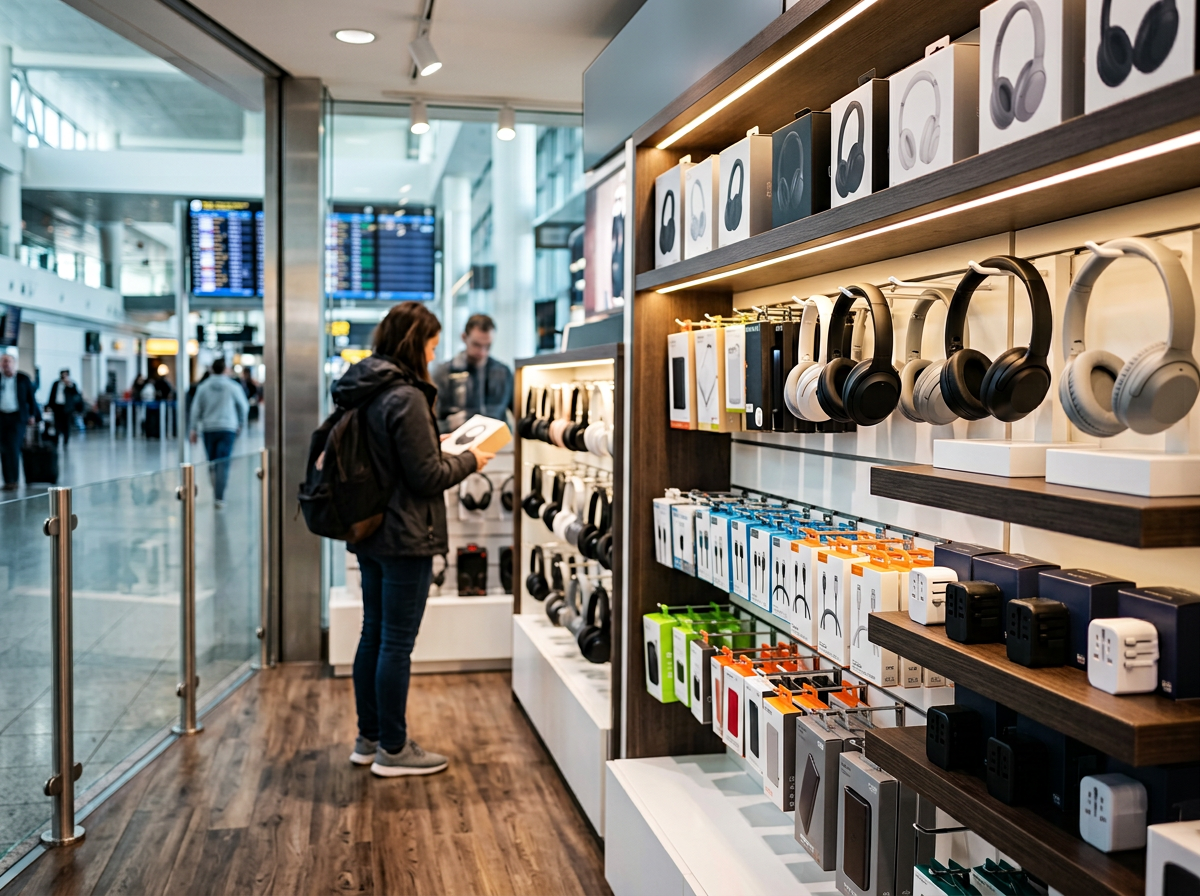
The recommendation should lead somewhere useful: directions, a verified merchant page, an available booking flow, or an appropriate staff handoff. A passenger looking for a charger could receive an accessible electronics-store referral; if stock and compatibility are connected and verified, the assistant could narrow the choice. Without that evidence, it should help the passenger check with the retailer — not promise that the correct charger is waiting. That is how conversational discovery can support airport retail revenue without becoming unreliable sales advice.
Airport Upselling: Offer a Better Fit, Not Just a Higher Price
Upselling means offering a higher-value version of the service a passenger is already considering. Its commercial justification should be a meaningful benefit to that passenger.
A traveller comparing parking options may value a shorter transfer or covered parking. Someone seeking a workspace may value a reservable room rather than a general seating area. The assistant should explain the differences, total price and relevant conditions, then leave the decision to the passenger.

A good upsell answers three questions:
- What additional benefit does the passenger receive?
- What does it cost beyond the original option?
- Is that benefit usable during this journey?
Check existing entitlements first
Lounge access is a useful example. Before suggesting a paid option, the service should help establish whether the passenger already has access through a ticket, membership or other entitlement. Where eligibility cannot be verified automatically, refer the passenger to the appropriate operator or check process.

Selling access that is already included is not a successful upsell. It is a failure of service. Likewise, premium products should never be positioned as the only way to receive assistance that is complimentary or otherwise owed to the passenger. A commercial assistant needs the ability to recommend the cheaper option — or no purchase at all.
Airport Cross-Selling: Connect Complementary Purchases
Cross-selling offers a complementary product or service rather than upgrading the original choice. The relationship between the two should be obvious to the passenger. The following examples illustrate the distinction; they are not claims about live inventory or existing deployments.

| Passenger need | Relevant referral | Possible commercial extension | Necessary check |
|---|---|---|---|
| A quick breakfast | An accessible café | Add a suitable food item to a coffee order | Preparation and collection time |
| Quiet time to work | An eligible workspace or lounge | Upgrade to a reservable private workspace | Availability, access and existing benefits |
| A forgotten charger | An electronics retailer | Add a compatible adapter if needed | Actual compatibility and stock |
| Convenient airport parking | Available parking choices | Upgrade to a closer parking product | Total cost, availability and transfer details |
| A gift before boarding | A suitable shop on a feasible route | Add gift wrapping or a complementary item | Collection time and applicable restrictions |
A useful commercial policy is to resolve the original request before suggesting an additional purchase. Keep the extension optional, explain the full price, and stop when the passenger declines. Airport upselling and cross-selling should also respond to changing conditions: if a gate changes or the passenger's usable time becomes uncertain, the earlier suggestion may no longer be appropriate. Operational updates should take priority over completing the sale.
What Airports Can Learn from Shopping-Mall AI
The commercial idea behind Lycia AI's shopping-mall approach is straightforward: connect a visitor's request to relevant stores, dining options, promotions and services, including sponsored recommendations, rather than relying only on a static directory. See our shopping-mall AI solution for the underlying model.
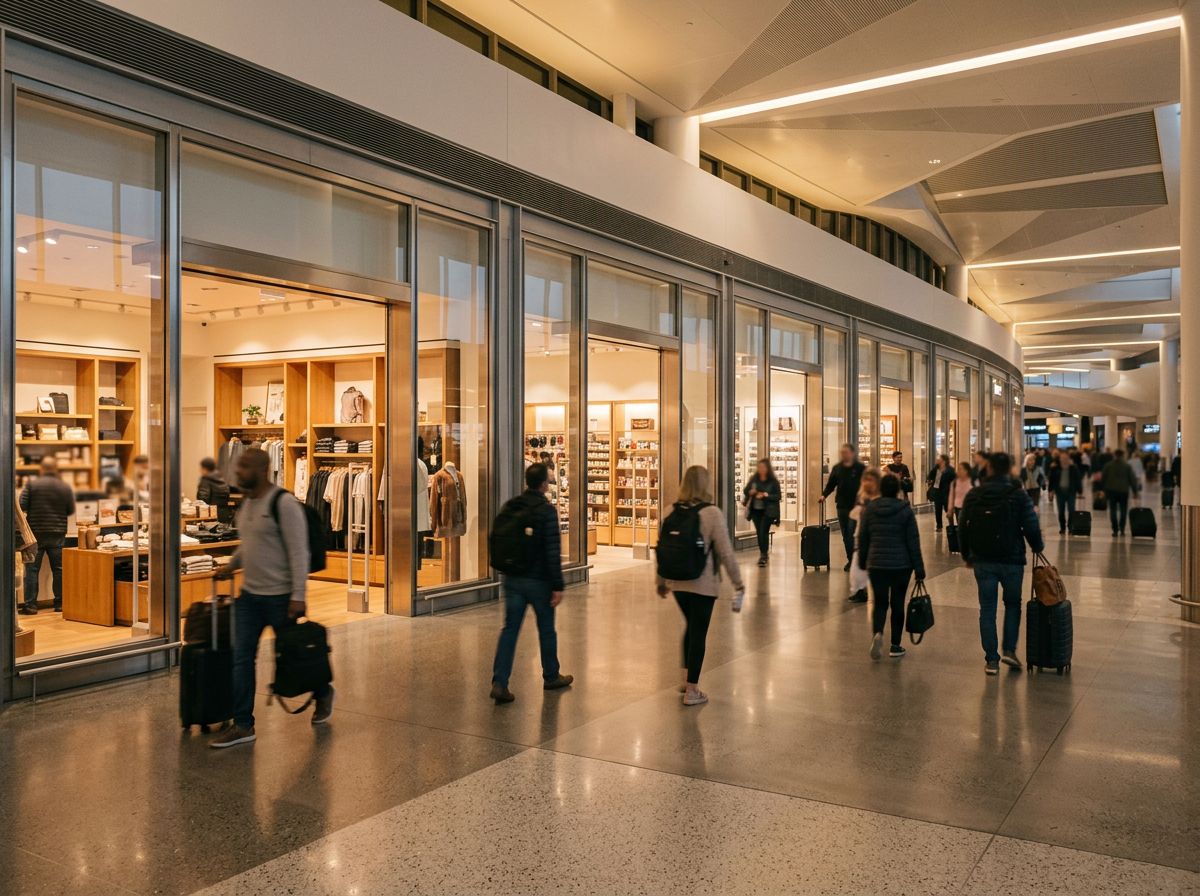
Airports can adapt that approach, but should not copy it unchanged. A mall recommendation may prioritize proximity and preference. An airport recommendation must additionally account for terminal boundaries, security access, boarding requirements, collection constraints and changing operational information.
The transferable commercial principle is:
Understand the person, understand the place, connect the relevant business and enable the next useful action.
The airport-specific rule is equally important:
A commercial opportunity is eligible only while it remains compatible with the passenger's journey.
Sponsored placement can fit this model, but payment should not make an inaccessible or unsuitable merchant appear relevant. Airport commerce is increasingly discussed as an integrated marketplace — connecting fragmented merchant data, operations and personalization into one experience — so relevance and disclosure, not personalization alone, are what should differentiate an assistant.
How Does the Airport Actually Earn Revenue?
A merchant sale is not automatically airport revenue. Before building a business case, identify the contract that connects passenger spending to airport income. Roland Berger's commercial-effectiveness framework for airports names customer insights and data, commercial capabilities, airport operations, business partnerships, and retail space and investments as the building blocks that determine whether commercial activity actually converts into airport results.
| Revenue route | Potential airport income | Commercial question to resolve |
|---|---|---|
| Retail or dining concession | Turnover-related payments where contracts provide for them | Does additional merchant turnover change the amount payable to the airport? |
| Airport-operated service | Revenue from an airport-controlled service, such as parking | What contribution remains after the cost of delivering it? |
| Referral or booking agreement | Agreed fees on qualifying transactions | Which completed transactions qualify, and who verifies them? |
| Sponsored recommendation | Payment for clearly identified, eligible promotional placement | What exactly is sold: placement, exposure or a verified outcome? |
If a tenant pays fixed rent only, extra sales may benefit the tenant without immediately increasing airport receipts. If a concession has a minimum guarantee and a turnover-related component, the marginal effect depends on the contract and whether the relevant threshold has been reached. Commercial reporting should distinguish merchant turnover (what passengers spend), airport-retained revenue (what the airport receives under its agreements) and airport contribution (what remains after incremental costs).
What Data and Integrations Are Needed?
An assistant can only act reliably within the information and authority available to it. Start with a trustworthy commercial directory — merchant names, locations, opening hours, categories, contact details and verified service descriptions, with clear ownership for updates. Add location, route and operational context so recommendations respect terminal and gate boundaries. Offers, availability and eligibility need dependable sources; food requirements should be passed accurately to the merchant, and the assistant should not guarantee allergen safety from an incomplete menu description.
A referral can end at an existing merchant checkout. An integrated booking or ordering journey requires verified connections, clear permissions and a defined process for confirmations, failures, cancellations and refunds. The assistant should distinguish "I found an option," "I opened the booking page" and "Your booking is confirmed" — different states with different evidence requirements. Agreed referral identifiers, booking references or redemption codes can help connect a recommendation to an outcome; use the least personal data necessary and define retention and access rules.
Measure Incremental Revenue, Not Just Engagement
An assistant that generates more clicks may be improving discovery. It has not yet proved that it increases airport revenue. Build a measurement chain with distinct stages: an eligible interaction, an accepted recommendation, a verified transaction, retained airport income, and — only after comparing against a baseline — incremental contribution.

Attribution is not incrementality. A referral code can establish that a purchase followed an assistant interaction; it does not prove that the purchase would not otherwise have happened. Where feasible, compare an eligible treatment group with a suitable control group, and account for flight mix, seasonality, opening hours, commercial promotions and changes in merchant participation. Check cannibalization — shifting a purchase from one airport shop to another is not necessarily additional airport income.
A useful conceptual calculation is:
Incremental airport contribution = incremental airport-retained revenue attributable to genuine additional activity − incremental delivery, incentive and operating costs.
Apply the airport's actual accounting rules and avoid counting the same payment twice. For teams asking how to increase airport revenue per passenger, define the denominator carefully: revenue per eligible assistant user can explain a pilot, but it should not be presented as revenue per passenger across the entire airport.
Protect Passenger Trust and Boarding Priorities
An airport assistant should help people travel first. Commercial recommendations are conditional on that responsibility. A sensible policy should answer urgent operational questions before presenting offers, suppress unsuitable promotions when boarding time is tight or uncertain, preserve access to complimentary and entitled services, make sponsored placement and total prices clear, keep optional personalization genuinely optional, avoid using sensitive personal information to target commercial offers, and provide a human handoff for unresolved access, eligibility or service problems.

During disruption, begin with authoritative information and the passenger's immediate needs. A relevant restaurant or lounge option may be useful, but an assistant should not exploit distress, obscure available assistance, or suggest that shopping takes priority over travel requirements. Commercial growth should never depend on prolonging queues or delays.
Start with a Focused Airport Commercial Pilot
Do not begin by connecting every merchant and monetizing every conversation. Select a journey with a clear passenger benefit, dependable information and a measurable revenue mechanism — food discovery in one departure area, a parking comparison, or referrals for travel essentials are scope examples, not a fixed rollout prescription.
Before launch, agree on the passenger problem, the eligible audience, participating businesses and who maintains their information, the revenue model, the baseline and comparison group, the safeguards that stop or escalate a recommendation, and the scale decision. Bring commercial, operations, IT, privacy and participating merchants into that agreement, and set success criteria before results arrive. Expand only when the pilot demonstrates reliable service and a defensible economic case — not simply strong engagement.
Frequently asked questions
How can AI increase non-aeronautical revenue at airports?
AI can support non-aeronautical revenue by matching passenger needs with relevant airport businesses, helping passengers compare appropriate premium options, and connecting complementary purchases. Airport income depends on verified transactions, commercial agreements and the incremental value created — not the number of recommendations alone.
What is the difference between a referral, an upsell and a cross-sell?
A referral directs a passenger to a relevant business. An upsell offers a higher-value version of a selected service, such as a closer parking product. A cross-sell offers a complementary item, such as a suitable food item with a coffee. Sponsored placement is a separate paid-promotion mechanism and should be disclosed.
Does an airport need a fully integrated marketplace to start?
No. A limited pilot can use a maintained directory, verified merchant links and agreed redemption tracking. The assistant should only claim live availability, confirmed bookings or completed payments when the corresponding systems actually support and verify them.
Is airport ancillary revenue the same as airline ancillary revenue?
No. Airline ancillary revenue concerns the airline's additional products and services. Airport commercial income depends on the airport's own services and agreements with operators, retailers and other partners. An airline sale is not airport revenue unless a specific arrangement gives the airport an income share.
Can an airport AI assistant guarantee higher revenue?
No. Results depend on passenger adoption, offer relevance, data quality, merchant execution, integration scope and contract economics. A measured pilot is the appropriate way to establish whether the assistant produces incremental value in a particular airport.
Turn passenger intent into a measurable business outcome.
Referrals help passengers discover. Upselling helps them choose a better-fit service. Cross-selling connects useful complements. Discuss a focused commercial pilot for your airport: the passenger need, participating businesses, required connections, safeguards and revenue model.
Explore the Airport AI Assistant →